

Banking & Financial Services Overview
Luxembourg’s banking sector plays a central role in the national economy, connecting international capital with local needs while supporting businesses, households and global investors.
Built on stability, openness and expertise, the financial centre has developed into a leading European hub for banking and financial services.
A Wide Range of Skills and a Wide Geographical Diversity
The Luxembourg Banking Services Centre
Retail Banking
Daily banking services for individual consumers or SMEs, e.g. savings accounts, loans and payment solutions. A very competitive market.
16,056 mortgage loans were granted for properties located in Luxembourg (+18% compared to 2023).
Total volume of €7.81 billion (+8.8% compared to 2023).
Source: ABBL-CSSF Retail Banking Survey, December 2024 figures
Private Banking
Supporting a wealthy clientele of Luxembourg or international families and entrepreneurs protect, grow and transmit their assets.
42 banks active in private banking. N°1 private banking centre in the eurozone with 756bn AuM. 90% of clients domiciled in Europe.
Source: ABBL-KPMG - CSSF Private Banking Survey, December 2024 figures
Corporate & Institutional Banking
Targeting national and international corporates by offering services such as corporate loans, debt structuring, cash management and trade finance.
70% of corporate lending in Luxembourg is focused on the international market
Source: ABBL-PWC-CSSF Corporate Banking Survey, December 2024 figures
Depositary & Custodian Banking
Bank services catering to the need of the fund industry.
An industry tailored to the leading position occupied by the Luxembourg fund industry, with 7,54tn AuD and 3,95tn AuC respectively.
Source: ABBL-KPMG-CSSF Depositary & Custodian Banking Survey, December 2024 figures
E-money & Payment institutions
Services meeting the needs of a digital economy, from consumers who increasingly shop online, to SMEs eager to expand cross-border, to merchants who need real-time cash flow visibility, and large corporates focused on optimising liquidity and operational efficience.
95% of payments in Luxembourg can now be made without cash, placing the country in second place in Europe.
70% of customers make their transfers remotely.
One in three Luxembourgers uses a mobile payment app to transfer money to another person.
Source: Survey on the payment attitudes of consumers in the euro area (SPACE), European Central Bank, 2024
But also:
Investment firms, PFSs, consulting firms, law firms, fintechs,…
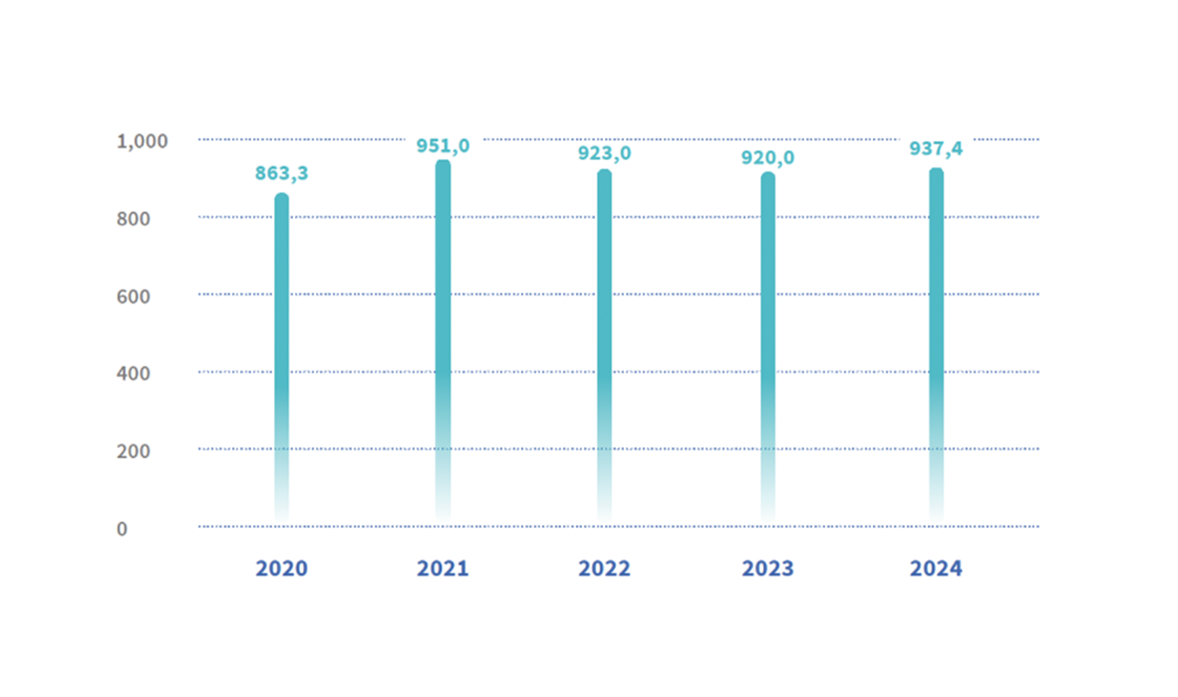
Total balance sheet in bn EUR
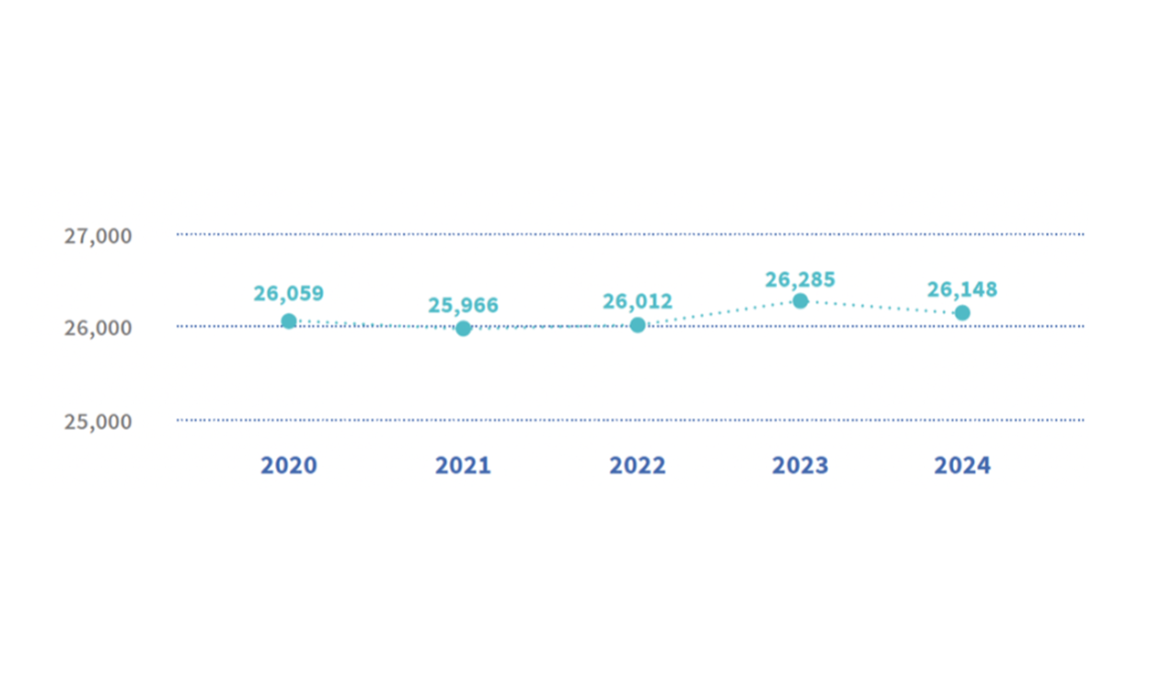
Stable and Multicultural Workforce in banks
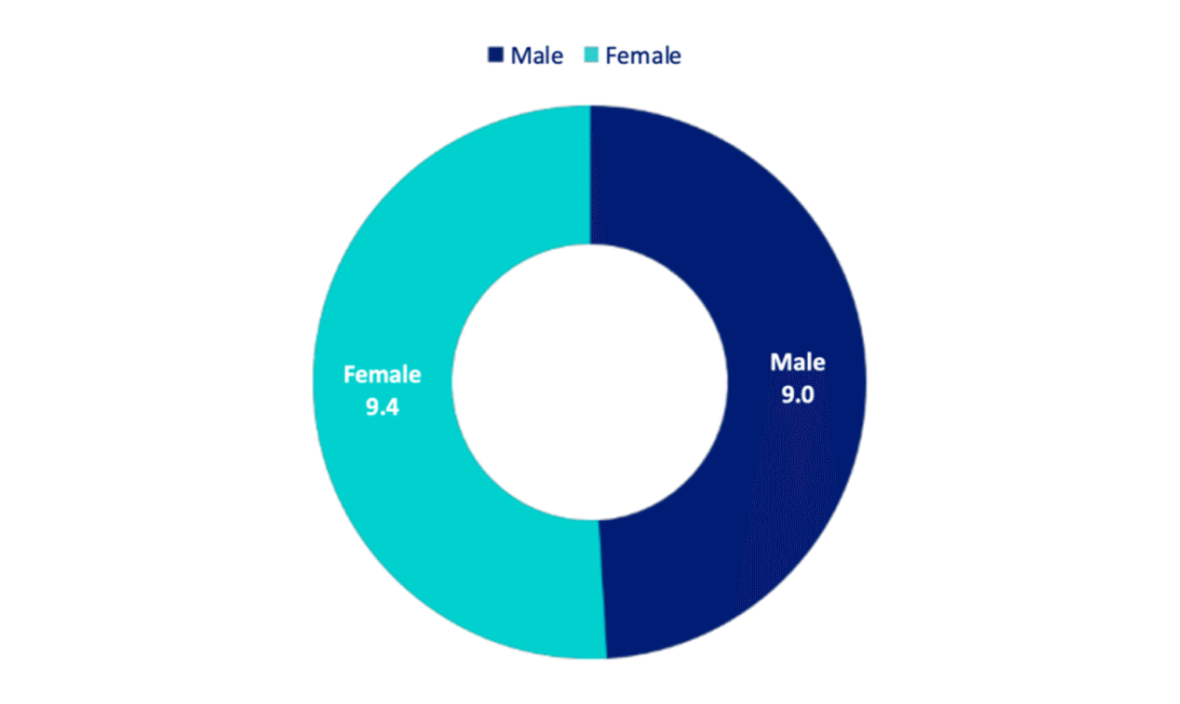
Average Age (2023)
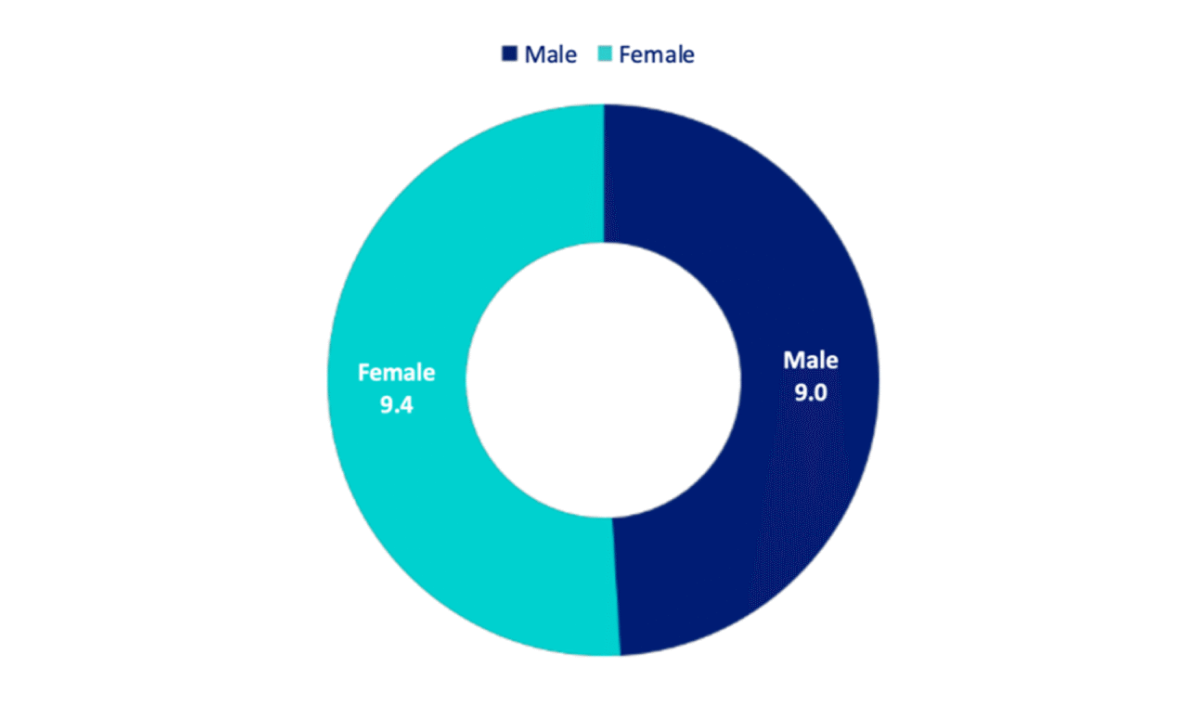
Average Years of Service (2023)
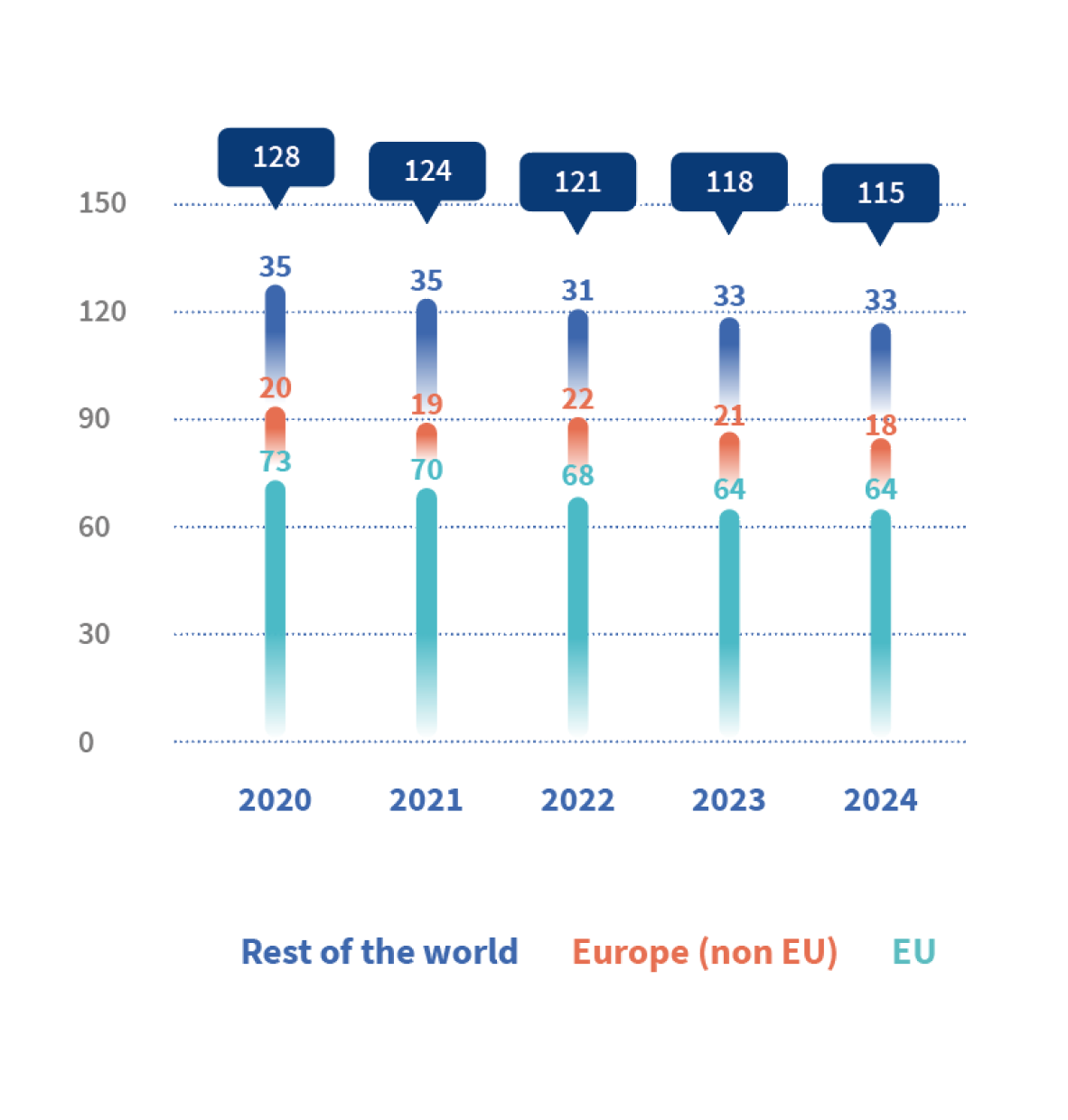
Number of Authorised Banks
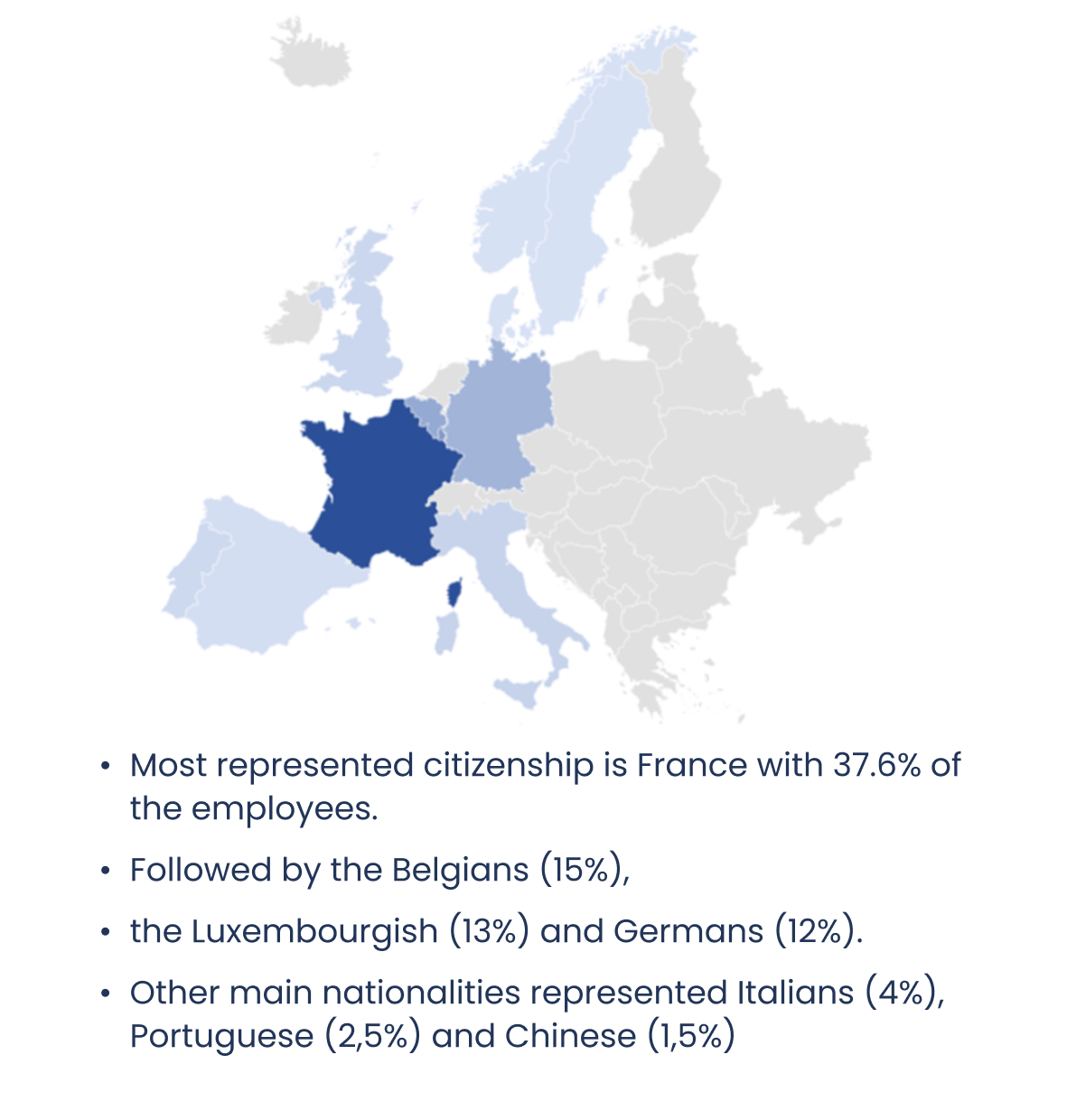
Employees' Distribution by Citizenship
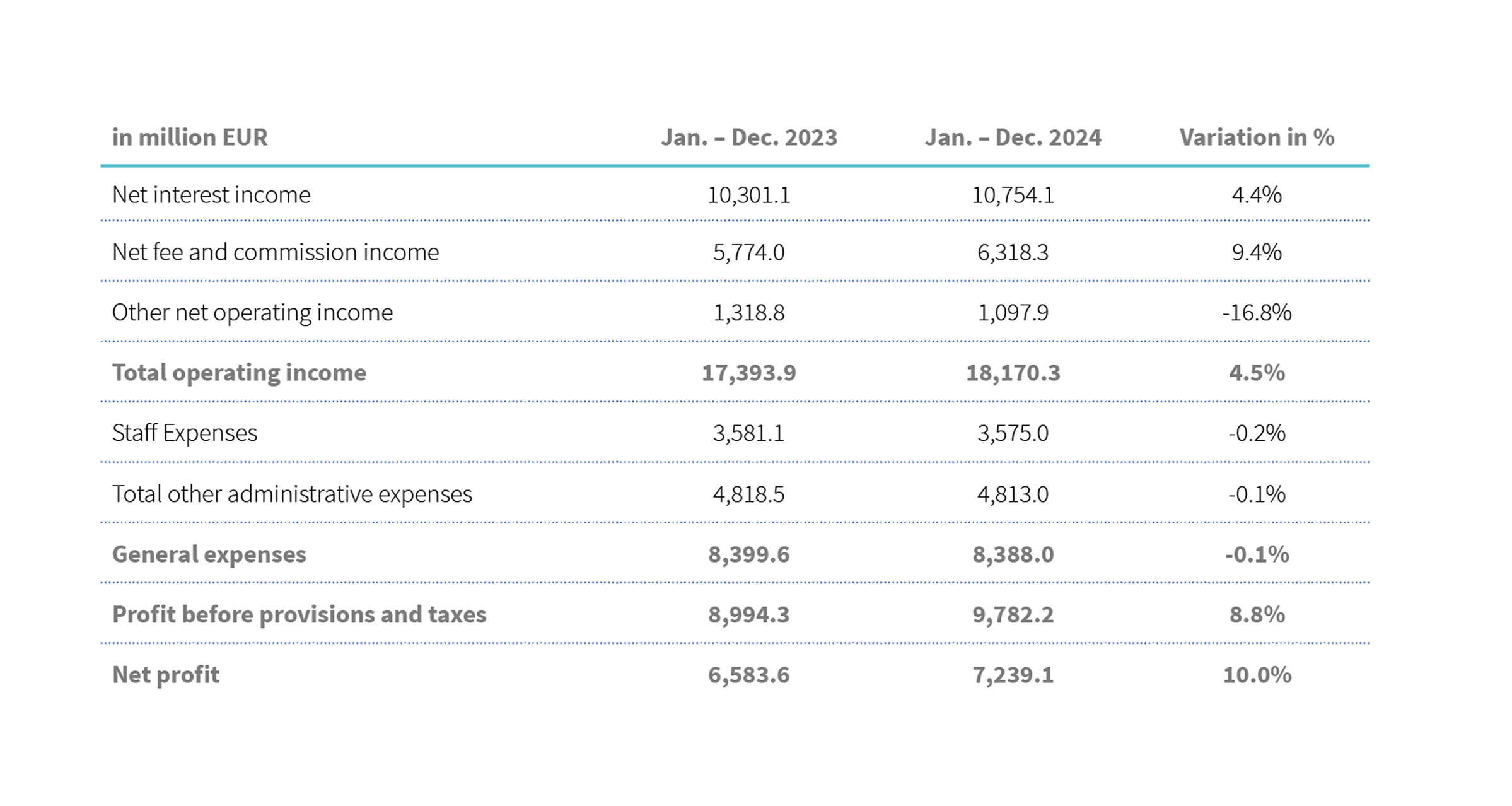
2024: Satisfying Results - Banks’ Profit and Loss
Luxembourg’s banking sector is both highly international and deeply embedded in the local economy. It serves a wide range of clients, from individuals and SMEs to multinational corporations and institutional investors.
Its strength lies in the diversity of its activities, covering retail, private, corporate and institutional banking, as well as depositary, custody and payment services. This broad spectrum of expertise allows Luxembourg to act as a key gateway for financial flows within Europe and beyond.
The Banking Sector: a Major Contributor to Luxembourg’s Welfare*
In 2024, the banking sector contributed to 43% (or EUR 7.439 bn) of the total financial sector’s gross value added (GVA) to the Luxembourg economy.
Financial sector productivity remains high: each employee generated EUR 236,400 in GVA in 2024, 2.4 times the national average of EUR 97,000.
The banking center’s contribution in terms of tax revenues was EUR 1.793,3 mio. With 30,3%, banking is within the financial sector the second largest contributor to tax revenue (excluding TABO) behind financial holding companies (33,2%).
*Source: LFF State of the Financial Sector 2025