

Education & Training
Financial independence: a goal, a mindset, or a myth?
Published on 24 March 2026
Exploring what it really means, with insights from ABBL experts featured in BIL’s myLIFE.
Summary
In a recent article published by myLIFE, the content platform of Banque Internationale à Luxembourg (BIL), ABBL experts Jessica Thyrion and Hélène Lange share their perspective on financial independence. Beyond common assumptions, their insights highlight a more nuanced reality shaped by choices, financial education and long-term thinking.
Rethinking financial independence
Financial independence is often portrayed as a distant ideal, sometimes associated with wealth, early retirement or complete freedom from work. However, as highlighted by Jessica Thyrion, Adviser – Financial Education at the Fondation ABBL pour l’éducation financière, the concept is both broader and more accessible.
Being financially independent does not necessarily mean being wealthy or no longer working. Rather, it refers to the ability to rely on alternative sources of income, such as investments or savings, to cover one’s needs — and, more importantly, to gain greater control over one’s financial life.
Hélène Lange, Head of Business Coordination at the ABBL, further expands this perspective by emphasising the notion of freedom of choice. Financial independence can mean having the flexibility to decide how to allocate one’s time, prioritise personal projects or adjust professional commitments, rather than being solely dependent on a salary.
A personal and evolving journey
One of the key messages emerging from the discussion is that financial independence is not a fixed or universal concept.
Each individual defines it differently, depending on their lifestyle, ambitions and stage of life. What constitutes financial independence for a young professional may differ significantly from that of a family with financial commitments, or someone approaching retirement.
As highlighted in the article, this notion evolves over time and requires continuous reassessment. It is therefore less a destination than a dynamic process, shaped by personal choices and changing circumstances.
Between aspiration and reality
While financial independence can be a powerful goal, it should not be seen as universally attainable in its most extreme form.
Not everyone will be in a position to stop working entirely. However, both experts stress that the objective should not necessarily be full independence, but rather greater financial resilience and peace of mind.
This distinction is essential. Financial independence becomes less of an absolute status and more of a guiding principle — a direction towards which individuals can progressively move through informed decisions and structured financial planning.
The essential role of financial education
A central takeaway from the discussion is the importance of financial education in making this goal more accessible.
In Luxembourg, as highlighted by Jessica Thyrion, financial literacy levels remain uneven, with a significant portion of the population lacking the necessary knowledge to make informed financial decisions. At the same time, individuals — particularly younger generations — are increasingly exposed to financial content online, which may not always be reliable.
In this context, strengthening financial education is critical to:
- counter misconceptions and unrealistic expectations
- support informed decision-making
- encourage responsible financial behaviour from an early stage
This aligns directly with the mission of the Fondation ABBL pour l’éducation financière, which aims to promote financial literacy and inclusion across Luxembourg.
Three key pillars to move forward
While there is no single path to financial independence, the discussion highlights three fundamental principles that can help individuals move closer to this objective:
 Responsible consumption
Living within one’s means and making conscious spending decisions
 Regular saving
Building financial reserves over time, regardless of the initial amount
 Diversified investment
Growing capital through a structured and diversified approach
Together, these pillars form the foundation of a sustainable financial strategy, adaptable to individual goals and circumstances.
A collective responsibility
Beyond individual choices, the discussion also points to a broader responsibility shared by financial institutions, educators and public authorities.
Providing access to clear, reliable and accessible financial information is essential to ensure that individuals are equipped to navigate increasingly complex financial environments.
Professional guidance also plays a key role. As highlighted in the article, turning to trusted experts — such as bankers, notaries or financial advisers — remains an important step in building a sound and realistic financial strategy.
From myth to mindset
Ultimately, financial independence should not be seen as a myth reserved for a privileged few, nor as a rigid objective.
It is better understood as a mindset — one that encourages individuals to take ownership of their financial future, define their priorities and make informed decisions aligned with their life goals.
By strengthening financial education and promoting a more nuanced understanding of money, the financial sector can help transform this concept from an abstract aspiration into a tangible, achievable progression.
Read the original article on myLIFE (BIL): https://my-life.lu/en/financial-independence-myth-or-reality-30161/
Related news
-
 Education & Training
24 March 2026
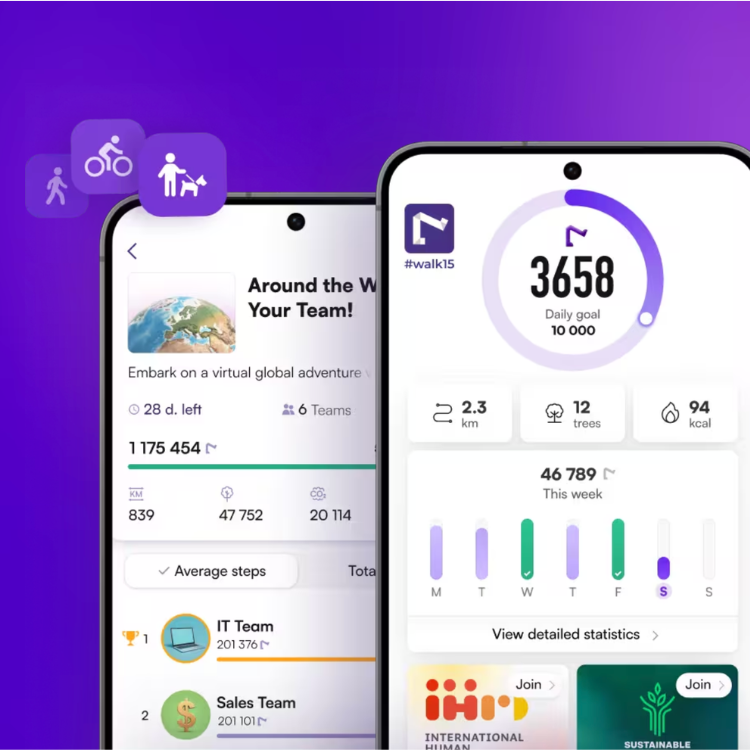
Let us bridge the gender gap in financial literacy: the EuroSteps Walking Challenge
> See all news

Hélène Lange
Head of Business Coordination, ABBL
Published on 24 March 2026