

Sustainable Finance
Greenwashing in finance: Not everything green is truly sustainable
Published on 20 November 2024
Greenwashing in finance can mislead investors with exaggerated sustainability claims, making transparency, financial education and informed investment decisions essential for building trust in sustainable finance.
Summary
Sustainable finance is on the rise, but not everything claiming to be green is as it seems. To protect investors and promote transparency, Lëtzfin has launched a campaign to make financial consumers aware of the various pitfalls and, above all, to be vigilant. This initiative aims to equip investors with the knowledge to identify misleading practices and make informed decisions, ensuring their investments deliver real environmental and social impact.
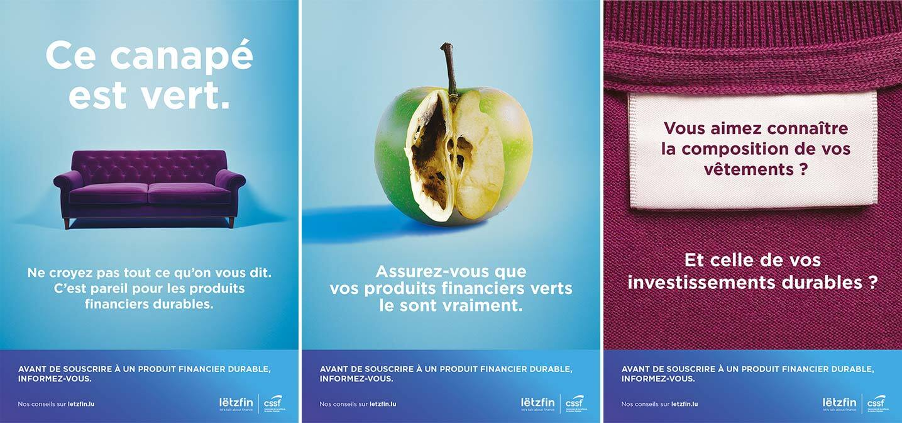
Lëtzfin is an initiative developed and managed by the CSSF (Commission de Surveillance du Secteur Financier) in Luxembourg. It serves as an educational platform aimed at raising awareness on various financial topics, including consumer protection and financial literacy. By providing tools, advice, and insights, Lëtzfin empowers individuals to make informed financial decisions while promoting responsible financial practices.
Financial education is vital to help investors understand what they are buying. By recognising and avoiding financial products that fail to deliver on their sustainability claims, we can build a trustworthy and impactful sustainable finance ecosystem.
Jessica Thyrion
Adviser – financial education, ABBL
Greenwashing in finance: why it matters
In the financial sector, greenwashing occurs when products or services are marketed as more sustainable than they truly are. Common tactics include:
- Exaggerated claims: Labelling financial products as “green” or “sustainable” without meeting recognised ESG (Environmental, Social, and Governance) standards.
- Lack of transparency: Insufficient or vague information about how investments are managed and their real impact.
- Dubious certifications: Labels that lack independence or rigour, offering a false sense of credibility.
- Selective reporting: Highlighting one sustainable product while other activities within the organisation fail to meet similar standards.
Such practices mislead investors who aim to align their portfolios with their sustainability values and undermine trust in sustainable finance.
How to protect yourself
The Lëtzfin campaign offers practical advice to help investors navigate the risks of greenwashing:
- Demand transparency: Look for detailed and verified reports about a product’s sustainability credentials.
- Question vague promises: Terms like “green” or “eco-friendly” must be supported by measurable and specific evidence.
- Verify certifications: Choose products with labels issued by recognised and independent organisations.
- Consult specialists: Engage financial advisors with expertise in sustainable investing to ensure your choices align with your goals.
Why the ABBL supports this campaign
For the ABBL, supporting the Lëtzfin campaign is a key step in promoting transparency and investor protection. By raising awareness of greenwashing, we can ensure that sustainable finance delivers on its promises and strengthens confidence in the sector.
Greenwashing not only misleads investors but also risks undermining the progress of sustainable finance as a whole. At the ABBL, we believe that a well-informed and vigilant approach to investing is essential to driving genuine environmental and social change.
Learn more about the campaign and its resources on www.letzfin.lu. Together, we can support a sustainable finance ecosystem that truly makes a difference.
Jessica Thyrion
Adviser – financial education, ABBL
Published on 20 November 2024