

Digital, Innovation, Payments
From innovation to scale: what digital assets need next
Published on 26 November 2026
Tokenised securities, digital money and distributed ledger technology are moving beyond experimentation. The harder question is now how to turn increasingly mature technology into financial services that deliver tangible value for clients.
In Singapore, the ABBL and Deloitte Luxembourg brought together banks, financial-market infrastructure providers, FinTechs and advisers to examine what it will take to move digital assets from promising use cases to trusted, interoperable and commercially viable solutions at scale.
Summary
Held on 16 November alongside the Singapore FinTech Festival 2026, Digital Assets & Capital Markets: A Luxembourg Perspective in a Global World brought Luxembourg and Singapore perspectives together at HSBC Singapore.
The event formed part of the ABBL’s broader presence in Singapore, where discussions throughout the week explored a recurring challenge for digital finance: technology is progressing rapidly, but adoption increasingly depends on interoperability, regulation, distribution and the ability to solve real client problems.
 A decade of experimentation is giving way to institutional use cases
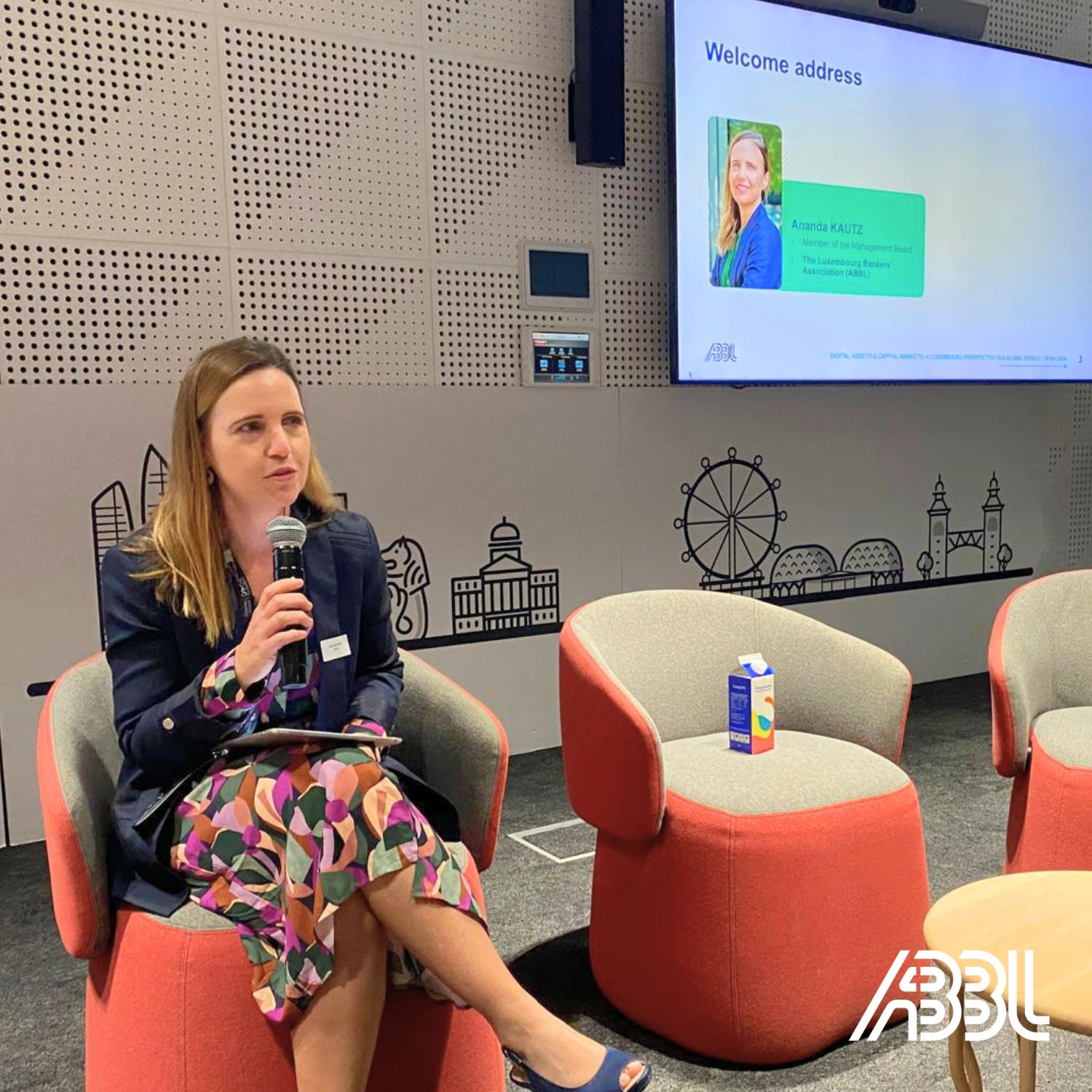
Opening the event, Ananda Kautz, Member of the Management Board at the ABBL, highlighted the complementary strengths of Luxembourg and Singapore and the opportunities created by stronger links between their financial ecosystems.
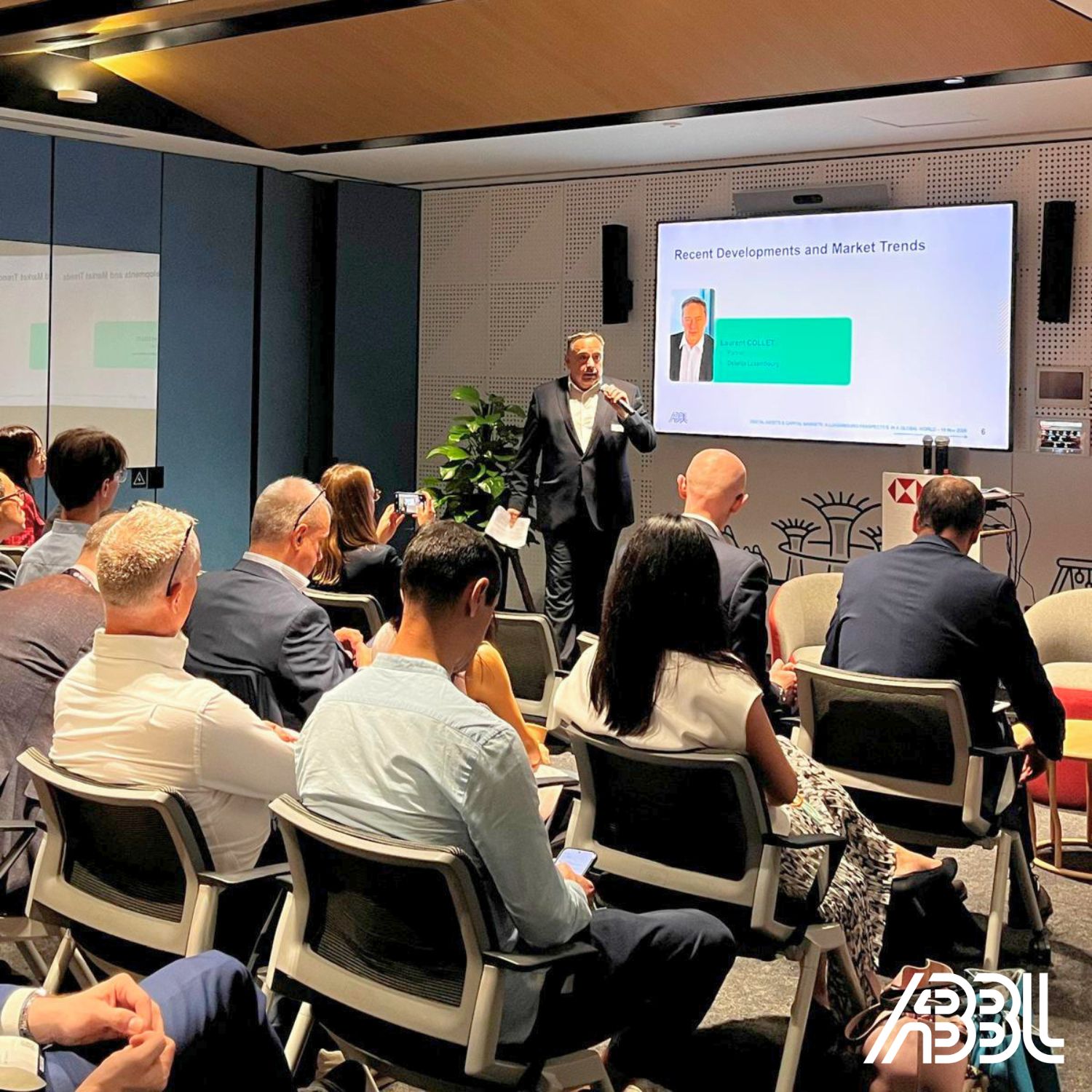
Laurent Collet, Partner at Deloitte Luxembourg, then looked back at a decade of blockchain development.
The market has moved significantly since the first wave of experimentation. Tokenised securities and investment funds are increasingly entering institutional finance, with examples ranging from digital bond issuances to tokenised money market funds.
DLT can offer faster settlement, greater automation and increased transparency. But technological capability is only part of the equation. Scaling these models also requires changes to operating processes, effective governance and infrastructure capable of interacting with both existing and emerging systems.
 Commercial value has to come first
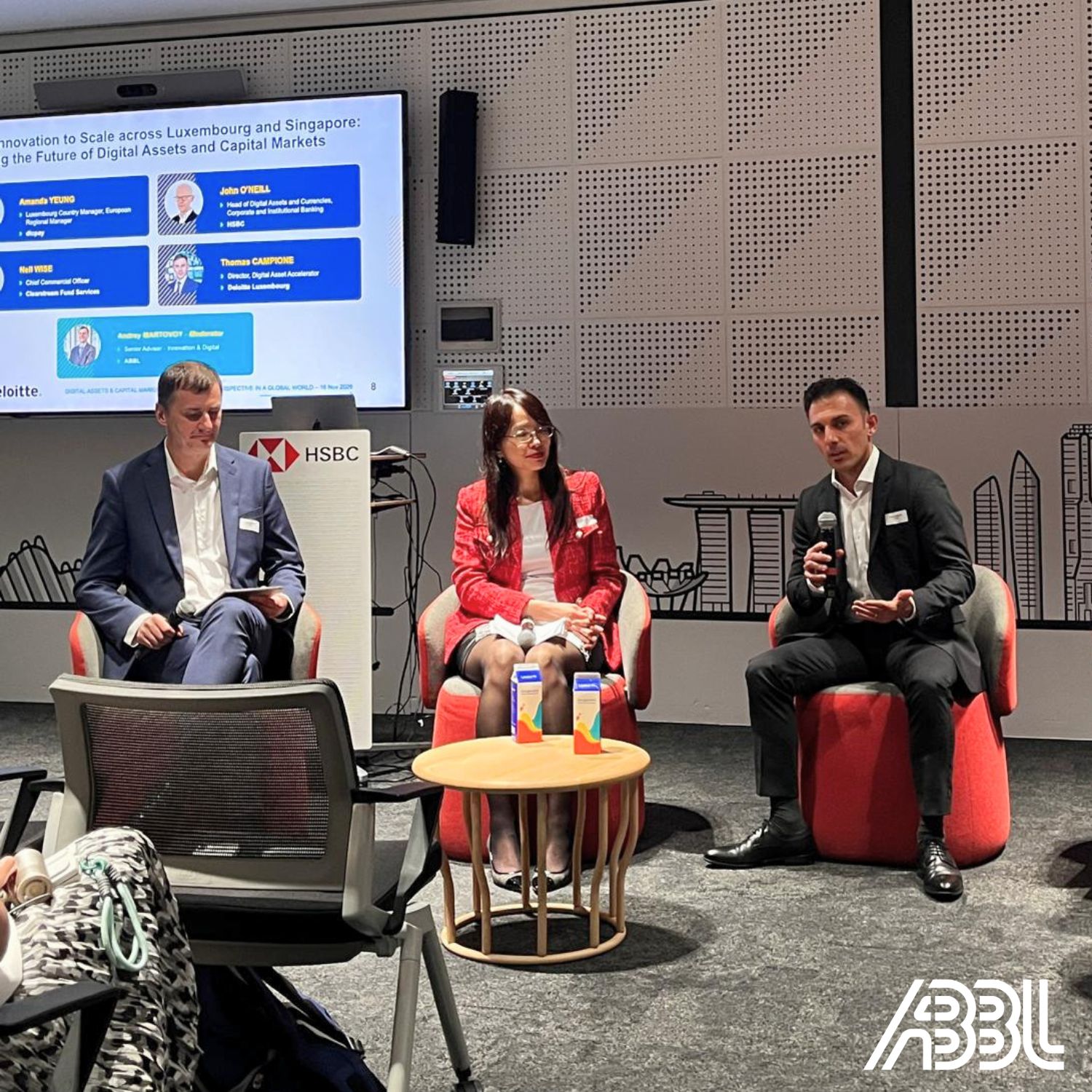
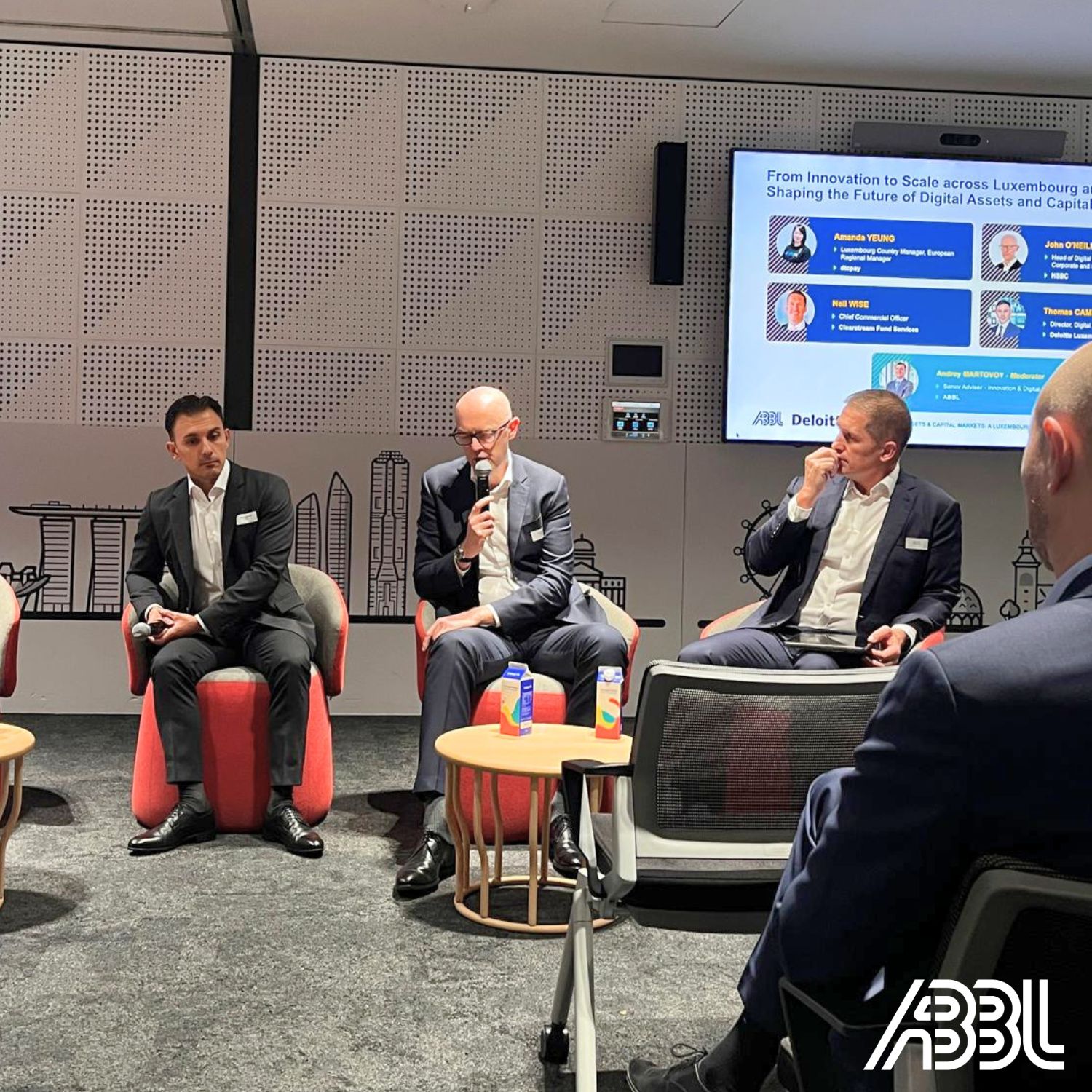
The panel From Innovation to Scale across Luxembourg and Singapore, moderated by Andrey Martovoy, Senior Adviser – Innovation & Digital at the ABBL, brought together:
- Neil Wise, Chief Commercial Officer, Clearstream Fund Services
- John O’Neill, Head of Digital Assets and Currencies, Corporate and Institutional Banking, HSBC
- Amanda Yeung, Luxembourg Country Manager and European Regional Manager, dtcpay
- Thomas Campione, Director, Digital Asset Accelerator, Deloitte Luxembourg
One message emerged clearly: tokenisation needs a business case.
Digital assets are already demonstrating potential in areas including tokenised money market funds, digital bonds, tokenised gold and corporate treasury services. Features such as intraday liquidity management, extended trading hours and faster settlement can create meaningful benefits for institutional clients.
But moving an existing product onto a blockchain does not automatically create value. Adoption is more likely where digital infrastructure addresses a genuine inefficiency, enables a new service or responds to an unmet client need.
 Scaling requires more than a successful pilot
Moving from individual projects to mainstream financial services requires a different level of maturity.
Regulatory compliance, cybersecurity, operational resilience and robust operating models become increasingly important as solutions move into production.
Distribution is equally critical.
A technically successful tokenised product does not automatically generate investor demand. Digital assets need to connect with established distribution channels and fit naturally into the way clients already access financial services.
From the client’s perspective, the technology should largely disappear into the background. The objective is not to make users interact with blockchain infrastructure, but to provide a better financial service.
 Interoperability could determine what scales
As more DLT platforms, tokenised assets and forms of digital money emerge, the risk is that innovation creates new silos.
Connecting new infrastructure with existing capital markets is therefore becoming one of the industry’s central challenges.
Initiatives such as the Eurosystem’s Pontes project point towards a future in which DLT-based transactions can interact more effectively with settlement in central bank money.
A gradual transition is likely. Traditional and digital infrastructures will coexist, potentially for a considerable period, making interoperability between old and new rails essential.
Without it, digital finance risks reproducing the fragmentation that technology was intended to reduce.
 Digital money will take several forms
The future is also unlikely to revolve around a single form of digital money.
Stablecoins, tokenised commercial bank deposits and central bank digital currencies can serve different purposes across payments, settlement and liquidity management.
Their development could enable more efficient cross-border transactions, extended operating hours and new approaches to liquidity management.
For banks, this evolution raises questions not only about technology but also about their role within emerging payment ecosystems.
Cooperation between banks and FinTechs will be particularly important. FinTechs can bring new infrastructure and payment capabilities, while banks contribute regulated balance sheets, liquidity, established client relationships and institutional trust.
The challenge is therefore not necessarily to choose between traditional and digital models, but to determine how they can work together.
 Luxembourg and Singapore: complementary financial ecosystems
The Singapore discussions also highlighted why international cooperation matters.
Luxembourg brings deep expertise in investment funds, securities services, cross-border finance and European financial regulation. Singapore has developed strong capabilities in digital payments, financial innovation and public-private collaboration, combined with extensive international connectivity.
The opportunity lies in connecting these strengths.
That means exchanging experience, developing common approaches and identifying areas where greater alignment could help digital financial services operate across jurisdictions rather than within isolated domestic ecosystems.

 From innovation to scale
After years dominated by pilots and proofs of concept, the digital-assets discussion is changing.
The central question is increasingly not whether the technology can work, but where it creates sufficient value to justify adoption and what conditions are required for it to operate securely at scale.
Commercial relevance, trusted infrastructure, regulatory clarity, distribution and interoperability will all play a role.
For Luxembourg, engaging with international financial centres such as Singapore provides an opportunity to test these questions against developments taking place elsewhere and ensure that its financial ecosystem remains connected to the next generation of financial infrastructure.
The next phase of digital finance will be defined not simply by technological progress, but by the industry’s ability to translate innovation into tangible client value at scale.
More from the ABBL at Singapore FinTech Festival 2026
This event formed part of a broader series of exchanges during the ABBL’s presence in Singapore. Explore the three fireside discussions:
Cross-border payments: making traditional and digital rails work together
Ananda Kautz, ABBL × Rahul Advani, Ripple
Securities services in the DLT era: from parallel rails to convergence
Andrey Martovoy, ABBL × Ying Ying Tan and John Hee Jung Ho, Standard Chartered
Connecting financial ecosystems: Luxembourg and Singapore
Ananda Kautz, ABBL × Chek-Tchung Foo, Association of Banks in Singapore
Digital Assets & Capital Markets: A Luxembourg Perspective in a Global World was organised by the ABBL and Deloitte Luxembourg and hosted at HSBC Singapore.

Andrey Martovoy
Senior Adviser - Innovation & Digital, ABBL
Published on 26 November 2026