

ABBL Internal
A new collective agreement to secure the future of the Luxembourg banking sector
Published on 25 April 2024
The new collective agreement aims to support the future of Luxembourg’s banking sector by addressing talent attraction, workforce transformation, competitiveness and evolving employee expectations.
Summary
In an increasingly unpredictable environment, the ABBL wishes to strengthen the attractiveness of the banking sector by working with its social partners to define a new collective agreement that will benefit the entire community. Negotiations with the unions aim to update the current agreement, which expired on 31 December 2023.
A false semblance of serenity in an increasingly turbulent world
Conflicts and geopolitical tensions, epidemics and environmental crises, inflation and economic recession, poverty and migration, disruptive technologies and asymmetrical competition, piling on regulations – these are all features of the world we live in today. Despite this, for most of our fellow citizens, the bad news still seems far away.
“Our banking sector probably contributes to this deceptive sense of comfort and security. After all, our services continue to operate reliably, day after day. We provide direct and indirect employment for tens of thousands of professionals, and we make a significant contribution to funding public interest projects, thanks to the taxes we pay. But will what seems to be a certainty today still be a certainty in the future?” asks Jerry Grbic, CEO of the ABBL.
Increased international competition
The Luxembourg financial centre stands out for its international openness. Its close link with foreign capital, while an undeniable strength, also represents a challenge. Almost 90% of the banks established in Luxembourg are affiliated to foreign groups. “In the face of growing competition between the world’s financial centres, the directors of Luxembourg banks strive every day to highlight the attractiveness of our financial centre,” stresses Jerry Grbic.
However, since the 2008-2009 crisis, European banks have become less competitive than their American and Asian counterparts. Even more worryingly, Luxembourg banks are at the bottom of the European league table in terms of value creation and cost/income ratio. “The productivity of the banking sector, although down in recent years, can be revitalised through strategic initiatives and targeted investment,” insists Jerry Grbic. “We now need to create a framework that allows banks to move forward again“.
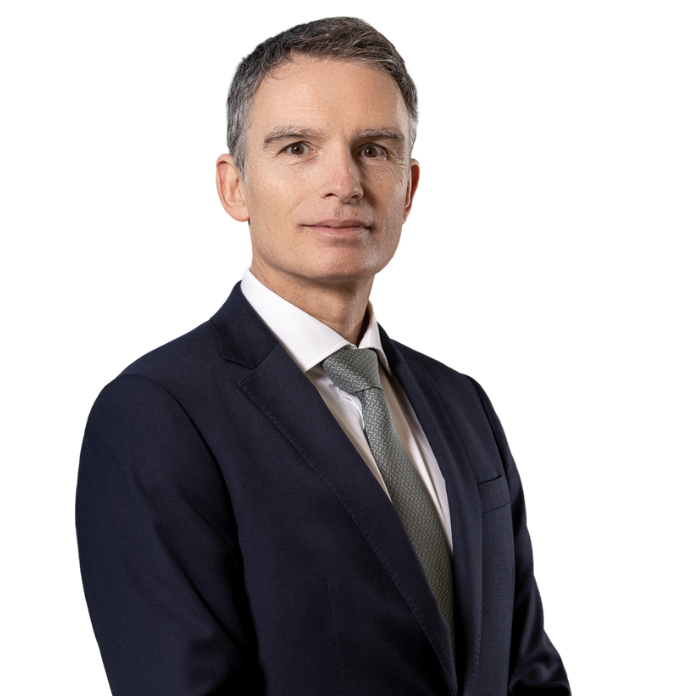

We now need to create a framework that allows banks to move forward again.
Jerry Grbic
CEO, ABBL
Attracting, retaining and employing talent as drivers of competitiveness
A company’s success depends first and foremost on its employees. For the banking sector, the challenges are as follows: Without the talent they need, how can banks achieve their own sustainable and digital transformation? How can they maintain a high level of security and compliance for their services? How can they continue to innovate for their customers? Similarly, without committed and competent employees, will banks still be able to support households and businesses in their sustainable and digital transition projects or contribute to strengthening the European Union’s competitiveness and strategic autonomy?
Attracting talent is one thing, retaining it and ensuring its employability is another. “The banking sector is one of the most exposed to the impact of climate change and the rise of Artificial Intelligence. Banks need to position themselves strategically to maintain their competitiveness while preparing their workforce for the emergence of new realities“, notes the ABBL CEO. A
What’s more, the expectations of today’s and tomorrow’s new recruits are different from those of yesterday. A quest for meaning, a work-life balance, flexible working hours, opportunities for development and advancement, and recognition of commitment are all factors that now take precedence over pay. Just as banks’ expectations are changing. “We are clearly looking to recruit change agents with a strong capacity to learn and adapt,” says Jerry Grbic.
A new collective agreement to build for the future
“We see the collective agreement as a foundation that provides stability, security and predictability, and allows all parties involved to work with added peace of mind,” emphasises Jerry Grbic. “But such an agreement also needs to be adapted at regular intervals to take account of the surrounding context and future challenges.” It should be noted that the current agreement was concluded taking into account the specific context of the pandemic.
The ABBL hopes to adapt certain provisions of the current agreement, in collaboration with the social partners, in order to create an environment conducive to the continuation and growth of banking activity in Luxembourg. The new agreement should make banking more attractive to future generations, while providing institutions with the resources they need to train their employees to keep pace with changes in the banking industry. As a result, they will be better prepared to pursue their careers within our institutions. The agreement should also enable banks to remunerate their employees according to their development and their contribution to the collective success, while encouraging investment in the transformation of managerial cultures to take better account of the aspirations of the new generation. Finally, the aim is to maintain a highquality working environment while promoting a more flexible organisation of working time, enabling banks to adapt effectively to the changing needs of their staff.
We see the collective agreement as a foundation that provides stability, security and predictability, and allows all parties involved to work with added peace of mind. But such an agreement also needs to be adapted at regular intervals to take account of the surrounding context and future challenges
Jerry Grbic
CEO, ABBL

Elisabeth Franssen
Legal Adviser, ABBL
Published on 25 April 2024