

Private Banking & Wealth Management
Luxembourg has the assets. The challenge is turning them into growth
Published on 30 September 2026
Avaloq’s inaugural Wealth Management Index ranks Luxembourg seventh among 15 international wealth management centres. Strong regulation, demographics and technology adoption provide solid foundations. The challenge now is turning those strengths into investment, innovation and sustainable growth.
Summary
Luxembourg’s seventh place in Avaloq’s inaugural Wealth Management Index tells only part of the story.
The index looks beyond where wealth is already concentrated to assess the conditions that allow wealth management centres to develop and scale, across macroeconomic conditions, financial market maturity, demographics, the regulatory environment and technology adoption.
Luxembourg performs strongly in several of these areas, while the results also point to opportunities to strengthen the broader environment for investment and wealth creation.
Geoffrey Dezoppy, Managing Director at Avaloq Luxembourg, and Jerry Grbic, CEO of the ABBL, discuss what the findings reveal about Luxembourg’s competitive position, where its strongest advantages lie and what it would take to convert them into further growth.
The index ranks Luxembourg seventh overall. Geoffrey, what lies behind that position?
Geoffrey Dezoppy: The ranking reflects Luxembourg’s strong structural foundations and its competitiveness as a wealth management centre. What is interesting about the index is that it goes beyond measuring where wealth already exists. It looks at the conditions that allow wealth management to develop and scale, across five pillars: macroeconomic conditions, financial market maturity, demographics, the regulatory environment and technology adoption.
The leading markets tend to perform consistently across these different dimensions. Luxembourg has some very clear strengths, particularly in its regulatory environment, demographics and digital adoption. The opportunity lies in achieving a stronger balance across all five pillars.


Luxembourg has some very clear strengths, particularly in its regulatory environment, demographics and digital adoption. The opportunity lies in achieving a stronger balance across all five pillars.
Geoffrey Dezoppy
Managing Director at Avaloq Luxembourg
Jerry, does that diagnosis resonate with the ABBL’s view of Luxembourg’s competitiveness?
Jerry Grbic: Very much so. The interesting message for me is that Luxembourg does not need to reinvent its model. It has assets that many competing financial centres would like to have: an international ecosystem, expertise, a trusted regulatory environment and a strong capacity to adopt new technologies.
But we cannot take those advantages for granted. Competition between financial centres is intensifying, and it increasingly comes from outside Europe. The question is therefore not simply whether Luxembourg remains a good place to conduct financial business. It is whether we can translate these strengths into investment, innovation, new activities and sustainable growth.
This is also why competitiveness has moved so high up the European agenda. Resilience and financial stability remain essential, but Europe now needs to ask systematically whether its framework also allows its financial sector to grow, innovate and finance the economy.
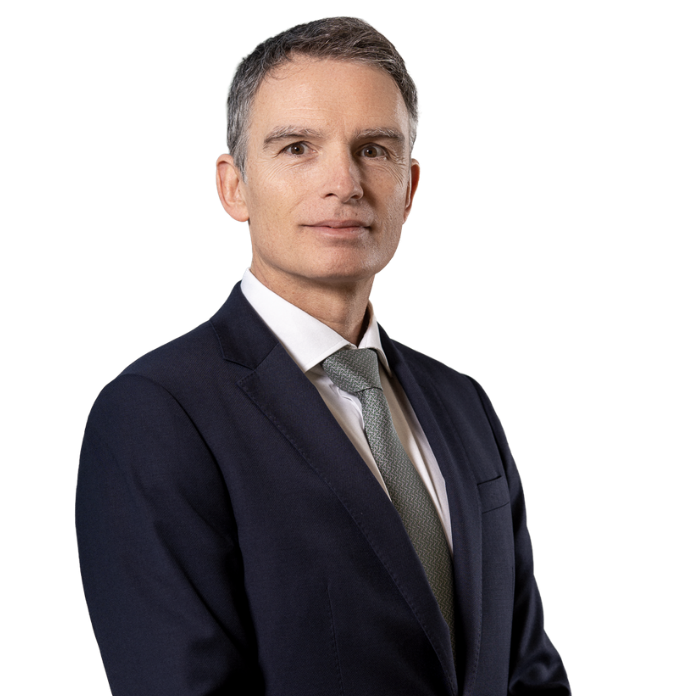
The question is not simply whether Luxembourg remains a good place to conduct financial business. It is whether we can translate these strengths into investment, innovation, new activities and sustainable growth.
Jerry Grbic
CEO, ABBL
Geoffrey, where does the index suggest Luxembourg has a genuine competitive edge?
Geoffrey Dezoppy: Some of Luxembourg’s strongest areas are precisely those that are difficult to replicate quickly. Its supportive regulatory environment, clear compliance frameworks and favourable operating conditions provide an important foundation for long-term wealth management growth.
Luxembourg also performs strongly on indicators linked to future demand for wealth management services, including wealth-ready households, financial engagement and digital participation. Combined with high levels of affluence, this creates favourable conditions for the sector to continue developing and adapting to changing client expectations.
Technology is particularly relevant here. Digital participation is already high, which means the foundations are there for wealth managers to deliver increasingly digital and personalised services.
Luxembourg scores particularly well on regulation and technology. Jerry, how do you reconcile that with the ABBL’s calls for regulatory simplification and greater room for innovation?
Jerry Grbic: There is no contradiction. Good regulation is an asset. Luxembourg’s score confirms something we strongly believe in: trust, investor protection and a predictable regulatory environment are part of the competitiveness of a financial centre.
The issue is not whether we need regulation, but whether every layer of regulation continues to deliver benefits proportionate to its complexity and cost. Over time, European financial regulation has accumulated requirements, reporting obligations and sometimes overlapping rules.
Simplification should therefore not mean deregulation. It should mean making the framework more coherent, proportionate and effective.
The same applies to technology. A high level of digital readiness is encouraging, but the real measure of success is what we do with it. Can firms deploy AI effectively? Can we develop tokenised financial markets? Can innovative services be brought to clients quickly and at scale? Digital capability has to translate into business capability.
Geoffrey, where is the biggest gap between Luxembourg and the leading centres?
Geoffrey Dezoppy: The largest differences are found in factors related to wealth creation, investment attractiveness and financial market depth. These are broader ecosystem characteristics and, in many cases, more difficult to influence directly than regulation or technology adoption.
That is what makes Luxembourg’s position interesting. Its strengths are structural and durable, while some of the remaining gaps concern broader market dynamics. Financial market maturity is one example, particularly when we look at retail investment participation and market depth.
So the story is less about fixing a fundamental weakness than about building on existing strengths while improving the overall environment in which investment and wealth creation take place.
Jerry, that sounds very close to the debate around Europe’s Savings and Investments Union. What could Luxembourg contribute?
Jerry Grbic: A great deal. Europe has substantial savings, but too much of that money does not find its way into productive investment. The objective should not be to oppose bank financing and capital markets. Europe needs both, alongside public investment, if it wants to finance innovation, the green and digital transitions, defence and its other strategic priorities.
Luxembourg has a particular role to play because we bring together banking, investment funds, wealth management, capital-market expertise and a broad ecosystem of specialised service providers. We can help connect savings with investment opportunities across borders.
But this also requires action at European level: removing unnecessary barriers to cross-border investment, making investment more accessible and attractive to citizens, and ensuring that banks and other financial-sector actors have the capacity to finance growth. A more integrated European financial market would strengthen both Luxembourg and Europe as a whole.
Geoffrey, Singapore tops the index and the United States comes second. What can Luxembourg learn from the leaders without trying to copy them?
Geoffrey Dezoppy: The main lesson is probably consistency. The highest-ranked markets do not rely on one exceptional advantage. They perform strongly across the different pillars.
Singapore, for example, combines favourable macroeconomic conditions with strong regulation, demographics and technology adoption. The United States benefits particularly from the depth and breadth of its financial markets.
Luxembourg has a different model and should build on its own advantages. Its regulatory environment, international orientation and demographics provide strong foundations. The opportunity is to complement these strengths with greater market depth, continued digitalisation and broader investor participation.
Jerry, if we repeated this index in five years, what change would you most like to see?
Jerry Grbic: Moving up the ranking would of course be welcome, but that should not be the objective in itself. What matters is what sits behind the numbers.
I would like to see a Luxembourg that has retained the trust, stability and international openness on which its success was built, while becoming even better at converting innovation into business and savings into investment. I would also like to see Europe closing part of the competitiveness gap with other global regions.
For Luxembourg, success means remaining a place where international financial groups choose not only to be present, but to invest, innovate and locate expertise, strategic functions and decision-making activities.
We already have many of the necessary assets. The challenge now is to make the most of them.
Paul Wilwertz
Head of Communication, ABBL
Published on 30 September 2026