

ABBL Institutional
Why competitiveness and innovation now matter as much as resilience
Published on 12 May 2026
The ABBL Annual Report 2025 highlights how competitiveness, innovation and operational resilience are becoming increasingly interconnected across Luxembourg’s financial sector.
Summary
In the ABBL Annual Report 2025, Jerry Grbic highlights how resilience, competitiveness and transformation are becoming increasingly interconnected across Luxembourg’s financial sector. Beyond financial solidity, the sector must continue to adapt to geopolitical uncertainty, digital transformation and growing operational complexity while preserving trust and supporting the real economy.


Resilience is not merely about absorbing shocks, it is about remaining competitive, preserving trust and continuing to finance the real economy.
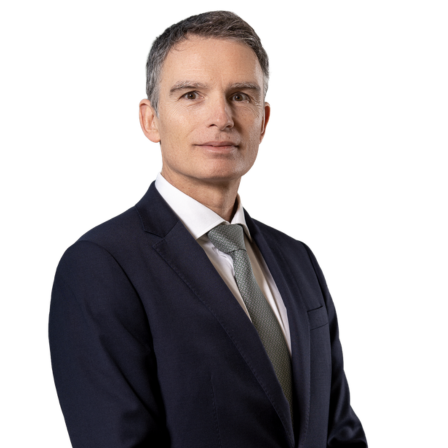
Jerry Grbic
CEO, ABBL
This message reflects one of the central themes of the ABBL Annual Report 2025.
While resilience has long been associated primarily with financial solidity, the report highlights how the concept now extends far beyond balance sheets and capital ratios.
Resilience in a changing environment
The report underlines how geopolitical uncertainty, accelerating digital transformation and growing regulatory complexity continue to reshape the operating environment for banks and financial institutions.
In this context, resilience increasingly depends on the sector’s ability to remain adaptable, competitive and trusted over the long term.
Competitiveness and smarter regulation
Another key message emerging from the report is the growing importance of competitiveness.
Throughout 2025, the ABBL continued to advocate for a more proportionate, coherent and innovation-friendly regulatory framework capable of supporting investment, growth and financial stability.
As highlighted in the report, resilience is not about reducing safeguards, but about ensuring that regulation remains effective, workable and aligned with economic realities.
Explore our detailed proposals for strengthening the competitiveness of the European banking sector.
Innovation and operational resilience
The report also highlights the increasing interconnection between innovation, cyber resilience and operational resilience.
From DORA implementation and cybersecurity initiatives to responsible AI adoption, instant payments and the launch of the ABBL Innovation Cluster, financial institutions continue to adapt to a rapidly evolving technological environment.
These transformations are reshaping not only operational models, but also the long-term competitiveness of Luxembourg’s financial centre.
Talent and attractiveness
The report further emphasises the importance of talent attraction, employability and professional development.
As technologies and business models evolve, attracting and retaining skilled professionals remains essential to Luxembourg’s attractiveness as an international financial centre.
The report also highlights ongoing initiatives related to financial education, diversity, social dialogue and long-term employability.

In a highly competitive international environment, the sector’s growth depends on Luxembourg’s ability to strike a balance between the cost of doing business, a fast time to market and a stimulating working environment.
Yves Stein
Chairman of the ABBL
A collective effort
Ultimately, the ABBL Annual Report 2025 highlights a broader idea: resilience is no longer a static concept.
It is a continuous process of adaptation, coordination and collective engagement across Luxembourg’s banking and financial sector.
Discover the ABBL Annual Report 2025 and explore the key priorities and transformations shaping Luxembourg’s financial centre.
-
ABBL Annual Report 2025
Jerry Grbic
CEO, ABBL
Published on 12 May 2026