

Digital, Innovation, Payments
European payments enter a new phase of integration and innovation
Published on 07 July 2026
Discover the key insights from the ABBL EPC Community Conference on SEPA, instant payments, fraud prevention, Verification of Payee and the future of European payments.
Summary
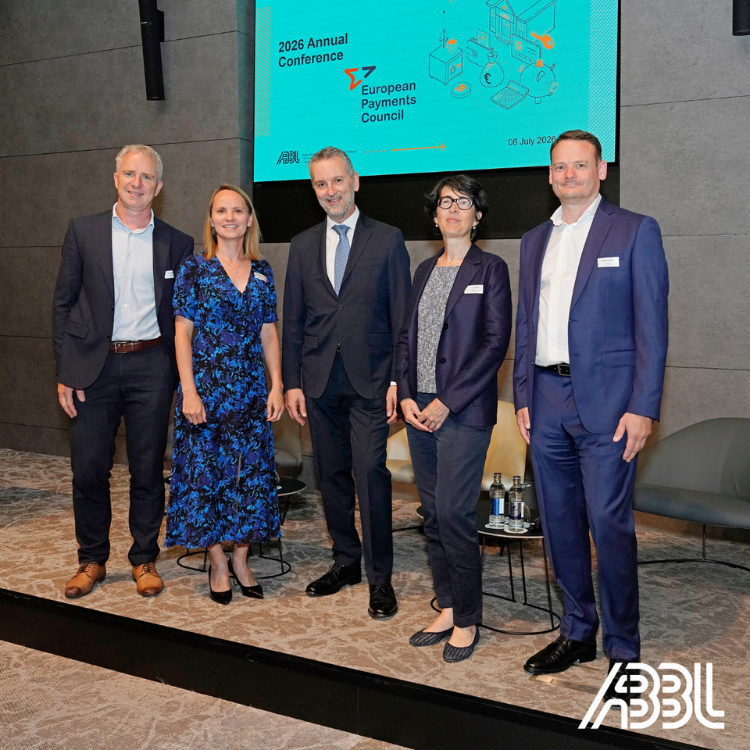 At the latest EPC Community Conference organised by the ABBL, European Payments Council Director General Giorgio Andreoli outlined how the next generation of European payments is taking shape. From instant payments and Verification of Payee to new fraud intelligence frameworks and a more inclusive payments ecosystem, one message stood out: Europe’s payment infrastructure is becoming smarter, faster and increasingly collaborative.
 From SEPA to a new generation of European payments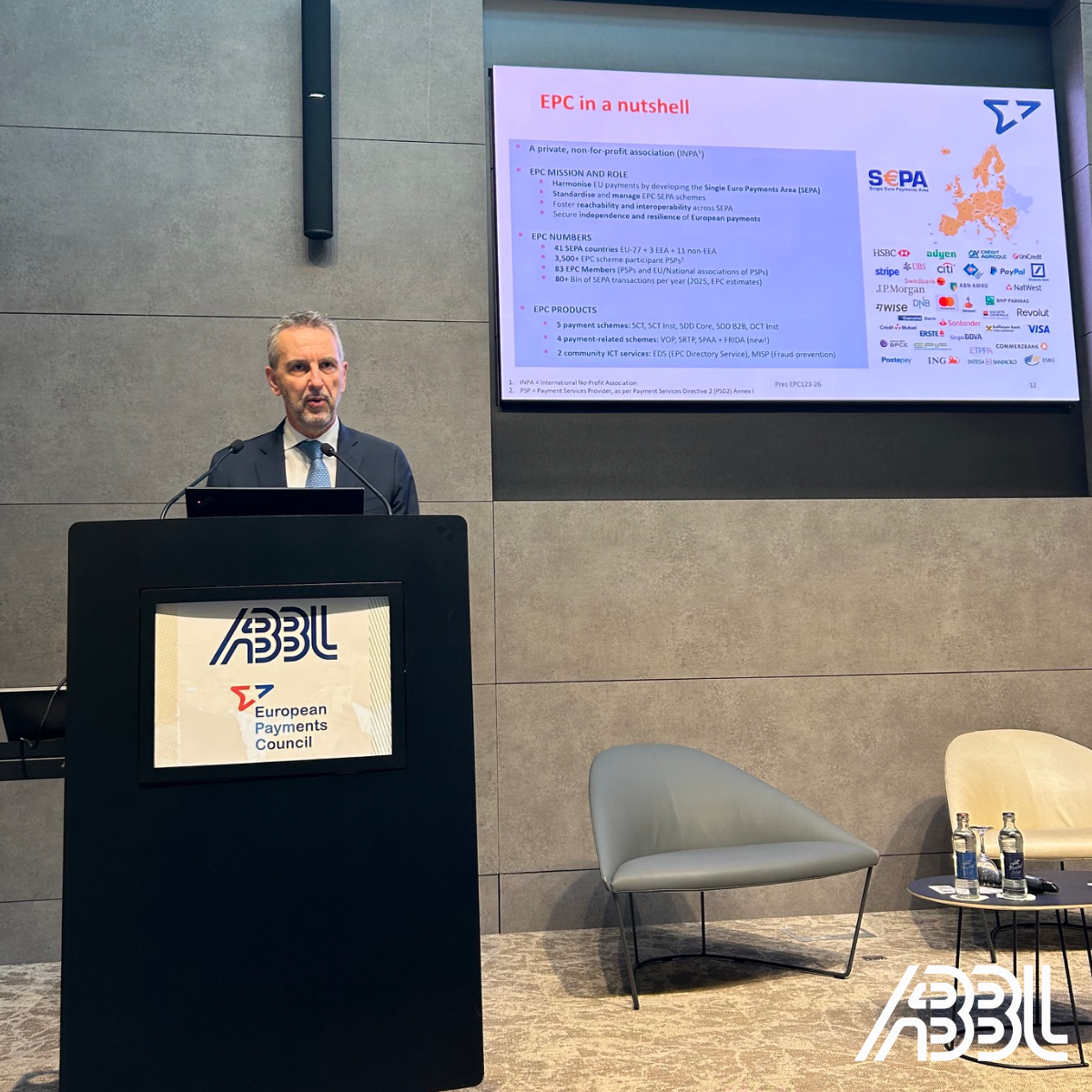
More than twenty years after the launch of SEPA, Europe’s payments ecosystem is entering a new stage of its evolution.
Opening the EPC Community Conference, Giorgio Andreoli, Director General of the European Payments Council (EPC), reflected on the remarkable journey that has transformed fragmented national payment markets into one of the world’s largest interoperable payment areas.
Today, the SEPA area brings together more than 3,500 payment service providers across 40 countries, processing billions of transactions each year under common European schemes and standards. What began as a harmonisation project has become one of Europe’s most successful examples of industry collaboration.
But the EPC’s mission is no longer limited to maintaining this infrastructure.
As customer expectations evolve, fraud becomes increasingly sophisticated and new market participants enter the ecosystem, the focus is shifting towards building the next generation of European payments.
That next phase rests on several strategic priorities:
- supporting the widespread adoption of instant payments across Europe;
- strengthening fraud prevention through collaborative initiatives such as Verification of Payee (VoP) and the upcoming Fraud Reporting Exchange Data (FREDA) framework;
- maintaining interoperability while embracing innovation;
- welcoming a broader range of payment service providers, including FinTechs and digital payment companies;
- and continuously adapting the SEPA schemes to meet changing market and regulatory needs.
As Giorgio Andreoli highlighted, the EPC’s role is increasingly to act as a neutral industry platform, bringing together banks, payment institutions, FinTechs, infrastructure providers and regulators to collectively shape the future of European payments.
As Europe seeks greater strategic autonomy in financial services, resilient, interoperable and trusted payment infrastructure is becoming an essential component of the continent’s long-term competitiveness.


SEPA is one of Europe’s greatest collaborative successes. The next phase will build on that foundation by making European payments faster, smarter and more resilient.
Giorgio Andreoli
Director General, European Payments Council
Further reading
Giorgio Andreoli on Europe’s payments future
Ahead of the ABBL EPC Community Conference, Giorgio Andreoli, Director General of the European Payments Council, shared his broader vision for the future of European payments in an interview with Paperjam.
The interview explores several themes discussed during the conference, including Europe’s strategic autonomy, the rise of instant payments, Wero, payment innovation and why he believes stablecoins are unlikely to become a mainstream retail payment instrument in Europe.
 Instant payments become the new normal
One of the clearest trends discussed during the conference was the rapid acceleration of instant payments.
Following the entry into force of the Instant Payments Regulation, adoption has grown significantly across Europe, confirming that real-time payments are moving from an optional service to becoming the default expectation for many customers.
For younger generations in particular, waiting one or two days for a payment increasingly feels outdated.
Looking ahead, speakers suggested that Europe may gradually move towards a model where most credit transfers rely on instant payment infrastructure, while certain non-time-critical payments continue to benefit from additional flexibility.
The discussion highlighted that the future is unlikely to be about replacing choice, but about offering the right payment experience for different use cases.
 Fraud prevention is becoming a shared responsibility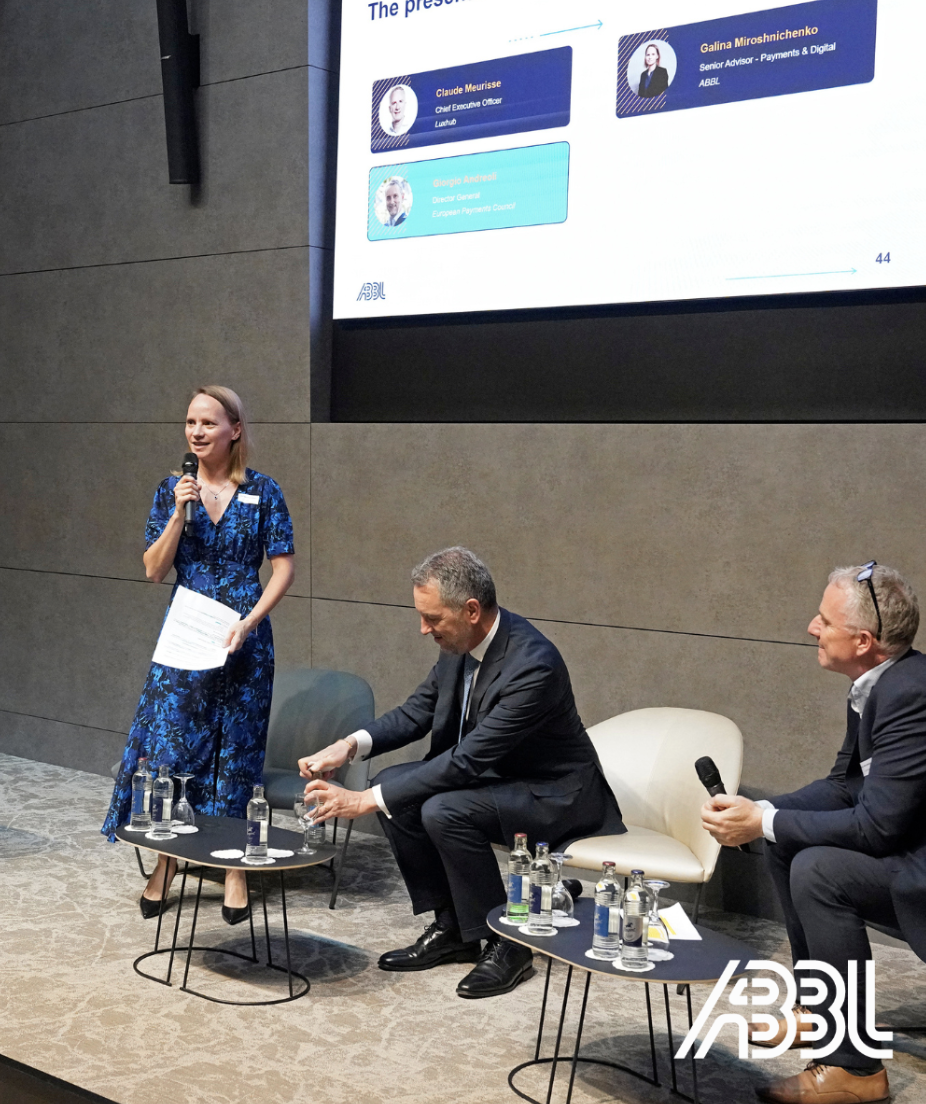
Fraud prevention formed the centrepiece of the first panel discussion.
Moderated by Galina Miroshnichenko (ABBL), the discussion brought together Giorgio Andreoli (EPC) and Claude Meurisse (Luxhub) to examine how European payment providers are moving from isolated fraud detection towards coordinated intelligence sharing.
Verification of Payee (VoP), introduced less than a year ago, already processes more than one billion checks every month and has rapidly reached high operational maturity across Europe.
While technical improvements remain under development, speakers agreed that VoP has already demonstrated its value by helping customers identify payment scams before money is transferred.
Attention is now shifting towards FRIDA (Fraud Information Distribution Arrangement), the EPC’s future framework enabling payment service providers to share fraud intelligence more effectively.
Rather than creating another isolated anti-fraud tool, FRIDA aims to establish a common European infrastructure that allows institutions to exchange relevant fraud signals while respecting data protection requirements.
As fraud becomes increasingly organised and cross-border, collaboration between institutions will become just as important as individual detection capabilities.
 Building a broader European payments ecosystem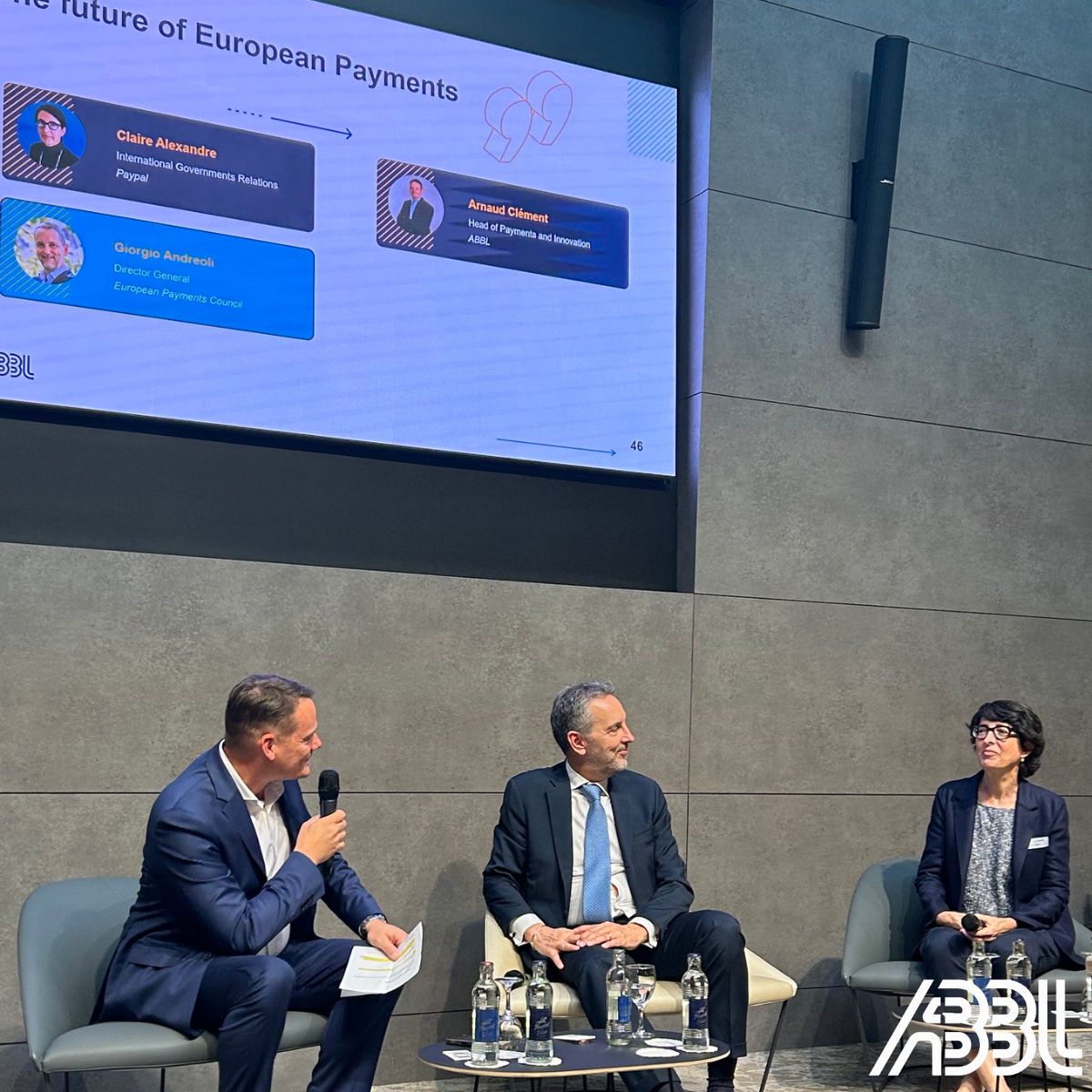
The second panel explored how Europe’s payments landscape continues to diversify.
Alongside Giorgio Andreoli, Claire Alexandre (PayPal) and Arnaud Clément (ABBL) discussed the growing role of FinTechs and digital payment providers within the EPC community.
PayPal’s recent accession as an EPC member illustrates how Europe’s payments governance is becoming increasingly inclusive, bringing together banks, payment institutions and global technology players around common standards.
Speakers agreed that maintaining open dialogue across the ecosystem will be essential as new technologies such as artificial intelligence, tokenisation, digital identity and stablecoins gradually reshape payment services.
Rather than competing with one another, these innovations are expected to complement Europe’s existing payment infrastructure while preserving interoperability and customer choice.
A shared European infrastructure for the future
Throughout the afternoon, one theme remained constant.
Whether discussing instant payments, fraud prevention or future innovation, speakers repeatedly returned to the importance of common European standards.
SEPA’s success demonstrates that collaboration between payment service providers can deliver infrastructure capable of supporting innovation while maintaining trust and interoperability across borders.
As Europe’s payments ecosystem evolves, that collaborative approach will remain one of its greatest competitive strengths.
Thank you
The ABBL thanks Giorgio Andreoli for sharing the EPC’s strategic outlook, as well as Claire Alexandre (PayPal), Claude Meurisse (Luxhub), Arnaud Clément (ABBL) and Galina Miroshnichenko (ABBL) for contributing to two insightful discussions on the future of European payments.

Arnaud Clément
Head of Payments and Innovation, ABBL
Published on 07 July 2026