

Digital, Innovation, Payments
Qivalis: building a European settlement infrastructure for the digital age
Published on 04 June 2026
Digital money is moving from concept to reality. Qivalis illustrates how European financial institutions are collaborating to build the trusted infrastructure needed for the next generation of financial services.
Summary
As European banks accelerate their work on regulated euro-denominated stablecoins, initiatives such as Qivalis illustrate a growing ambition to build trusted European alternatives to dollar-based digital money. Bringing together 37 financial institutions from 15 European countries, including Spuerkeess, the consortium reflects the growing momentum behind a European, bank-led digital settlement infrastructure.
For Luxembourg’s financial centre, Spuerkeess’s participation raises important questions about euro-based digital payments, monetary sovereignty, trust and the future role of banks in the digital asset ecosystem. We spoke with Ananda Kautz, Member of the Management Board of the ABBL, and Jacques Pütz, Head of Innovation at Spuerkeess, to explore both the strategic implications and the practical realities behind this initiative.
 In practical terms, what problem is the Qivalis initiative trying to solve?
Jacques Pütz: Today, many discussions around tokenised finance still happen in theory because one essential building block is missing: a broadly accepted euro-denominated settlement instrument adapted to blockchain environments. Most existing stablecoins are linked to the US dollar and rely on non-European ecosystems.
Qivalis is trying to close that gap. The idea is to develop a euro stablecoin that combines the efficiency of digital assets with the level of trust, regulation and stability expected from European financial institutions. The objective is not to create “another crypto asset”, but rather a reliable settlement layer that can support payments, tokenised assets and future blockchain-based financial services within a European regulatory framework.
Ananda Kautz: The financial infrastructure of tomorrow is being built now — and Europe cannot afford to be absent from that conversation, otherwise it risks becoming dependent on external ecosystems for parts of its future payment and settlement infrastructure.
What makes Qivalis interesting is that it reflects a willingness by European banks to work collectively on alternatives built under European rules and supervision. Beyond the technology itself, there is a clear strategic dimension around sovereignty, resilience and the international role of the euro.
Why did Spuerkeess decide to join Qivalis?
Jacques Pütz: For us, this is first and foremost a long-term strategic decision. We see distributed ledger technologies progressively becoming part of mainstream financial infrastructures, especially in areas such as settlement, payments and tokenisation. Joining Qivalis allows Spuerkeess to contribute to that evolution from the start, alongside major European banking players.
What also convinced us is the consortium approach. Building trusted infrastructures requires scale, interoperability and governance. Bringing together banks from across Europe creates a much stronger foundation than isolated initiatives would.
Qivalis at a glance
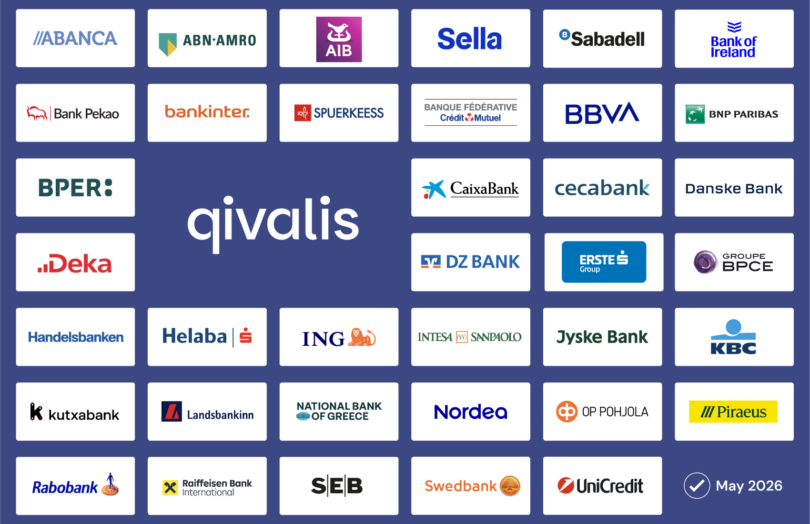
- 37 financial institutions
- 15 European countries
- Participation of Spuerkeess
- Focus on euro-denominated stablecoins
- Supporting payments, settlement and tokenised finance
- Developed within a European regulatory framework
What concrete use cases do you see emerging from this type of infrastructure?
Jacques Pütz: Cross-border payments are probably the most immediate example. Current processes can still involve delays, cut-off times and multiple intermediaries. Blockchain-based settlement infrastructures can significantly reduce friction and increase speed.
But the longer-term impact could be much broader. As tokenisation develops, assets such as bonds, funds or even real estate may increasingly circulate in digital form. Those ecosystems will require secure settlement mechanisms available around the clock.
We are also closely watching developments around programmable payments, treasury management and automated settlement processes. Some of these use cases are still emerging, but the direction of travel is becoming increasingly clear across the industry.

The objective is not to create another crypto asset, but a reliable settlement layer that can support payments, tokenised assets and future blockchain-based financial services within a European regulatory framework.
Jacques Pütz
Head of Innovation at Spuerkeess
Beyond stablecoins, what broader transformation of finance does Qivalis reflect?
Ananda Kautz: What we are seeing is the gradual convergence between traditional finance and blockchain-based infrastructures.
A few years ago, these discussions were still largely confined to crypto-native environments. Today, banks, central banks, regulators and market infrastructures are all exploring how tokenisation could reshape payments, settlement and capital markets more broadly.
We are entering a phase where financial services may become more real-time, more automated and increasingly programmable. Stablecoins are only one piece of that broader evolution because they provide a bridge between traditional currencies and tokenised ecosystems.
The key challenge now is ensuring that innovation develops in a secure, interoperable and properly regulated way.
The financial infrastructure of tomorrow is being built now — and Europe cannot afford to be absent from that conversation.
Ananda Kautz
Member of the Management Board of the ABBL
What opportunity does this create for Luxembourg’s financial centre?
Ananda Kautz: Luxembourg has often positioned itself where finance and cross-border innovation meet. In many ways, tokenisation and digital assets are a continuation of that story.
The participation of Spuerkeess in a consortium such as Qivalis sends a positive signal because it shows that Luxembourg is not simply observing these transformations from the outside. The country is participating in projects that may help shape future European market infrastructures.
There is also a broader ecosystem effect. These developments can attract expertise, technology providers and new financial services around regulated digital finance. And importantly for Luxembourg, this happens in an environment where trust, compliance and international interoperability remain central, which are all areas where the financial centre already has recognised strengths.
Looking ahead
The development of regulated digital money and tokenised financial infrastructures is accelerating across Europe. Initiatives such as Qivalis illustrate how banks are seeking to shape this transformation while preserving the principles that underpin trust in the financial system: security, resilience, interoperability and regulatory certainty.
For Luxembourg, remaining actively involved in these developments will be essential to ensuring that its financial centre continues to contribute to the future of European finance and the evolution of the euro in the digital age.

Ananda Kautz
Member of the Management Board of the ABBL
Published on 04 June 2026