ABBL Institutional
Building a shock-proof Europe: why resilience is now Europe’s greatest competitiveness challenge
Published on 08 July 2026
How can Europe strengthen its competitiveness in an era of permanent crises? Insights from the ABBL Chairman’s Dinner on resilience, finance and strategic autonomy.
Summary
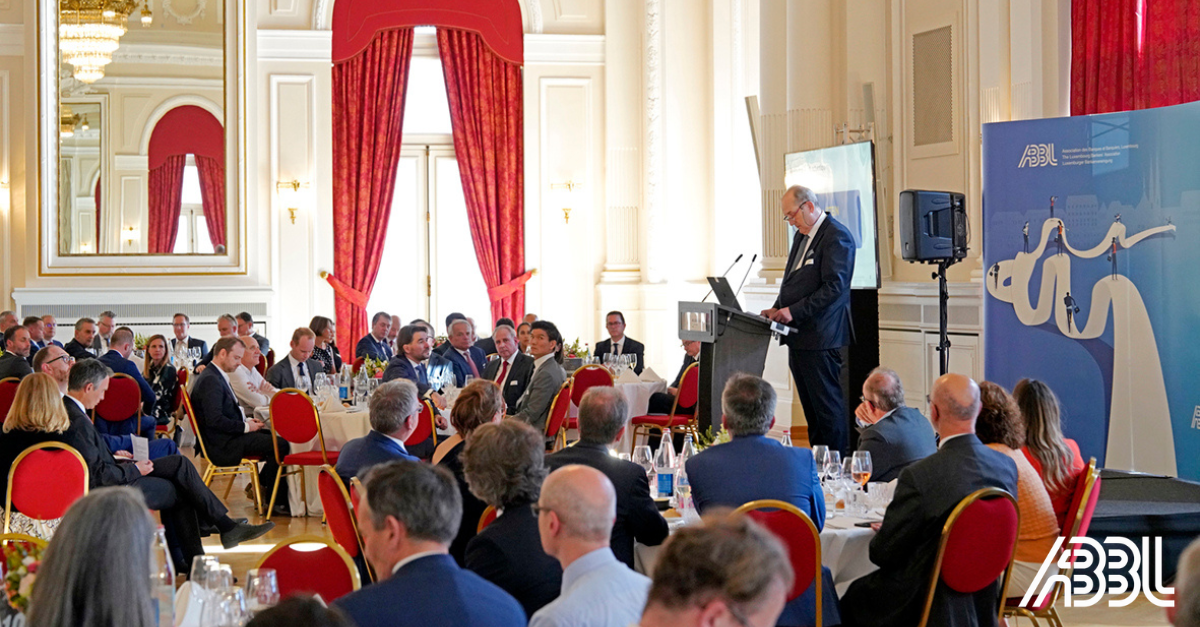 At the ABBL’s Annual Chairman’s Dinner, Europe was not discussed as a continent in decline, but as one facing a fundamental strategic choice: how to remain prosperous in a world where shocks have become permanent rather than exceptional.
On 7 July 2026, more than 130 CEOs from ABBL member institutions and representatives of Luxembourg’s financial community gathered at the Cercle Municipal for the ABBL’s Annual Chairman’s Dinner. Against a backdrop of geopolitical tensions, technological disruption and accelerating climate risks, the evening focused on a deceptively simple question: what will it take to make Europe more resilient?
 From crisis management to strategic resilience
If the past fifteen years have taught Europe anything, it is that crises no longer arrive one at a time. Financial turmoil was followed by sovereign debt stress, a pandemic, an energy crisis and Russia’s invasion of Ukraine. Each demanded a different response, yet together they revealed a broader reality: resilience can no longer be understood simply as the capacity to recover from shocks. It has become a prerequisite for competitiveness.
That was the central message of ABBL Chairman Yves Stein. Europe’s strategic ambitions—whether financing the green transition, strengthening defence or accelerating innovation—depend on a financial system capable of mobilising private capital at scale. Public budgets alone will not be enough.
Competitive banks, payment institutions, investment firms, fintechs and market infrastructures together form the ecosystem that transforms European savings into productive investment. The question is therefore not whether Europe should remain financially stable—it already has one of the world’s safest banking systems—but whether that stability also leaves sufficient room to finance Europe’s future.


Resilience is no longer simply about recovering from crises. It has become a prerequisite for Europe’s future competitiveness.
Yves Stein
Chairman of the ABBL
 Preparing for the risks we cannot predict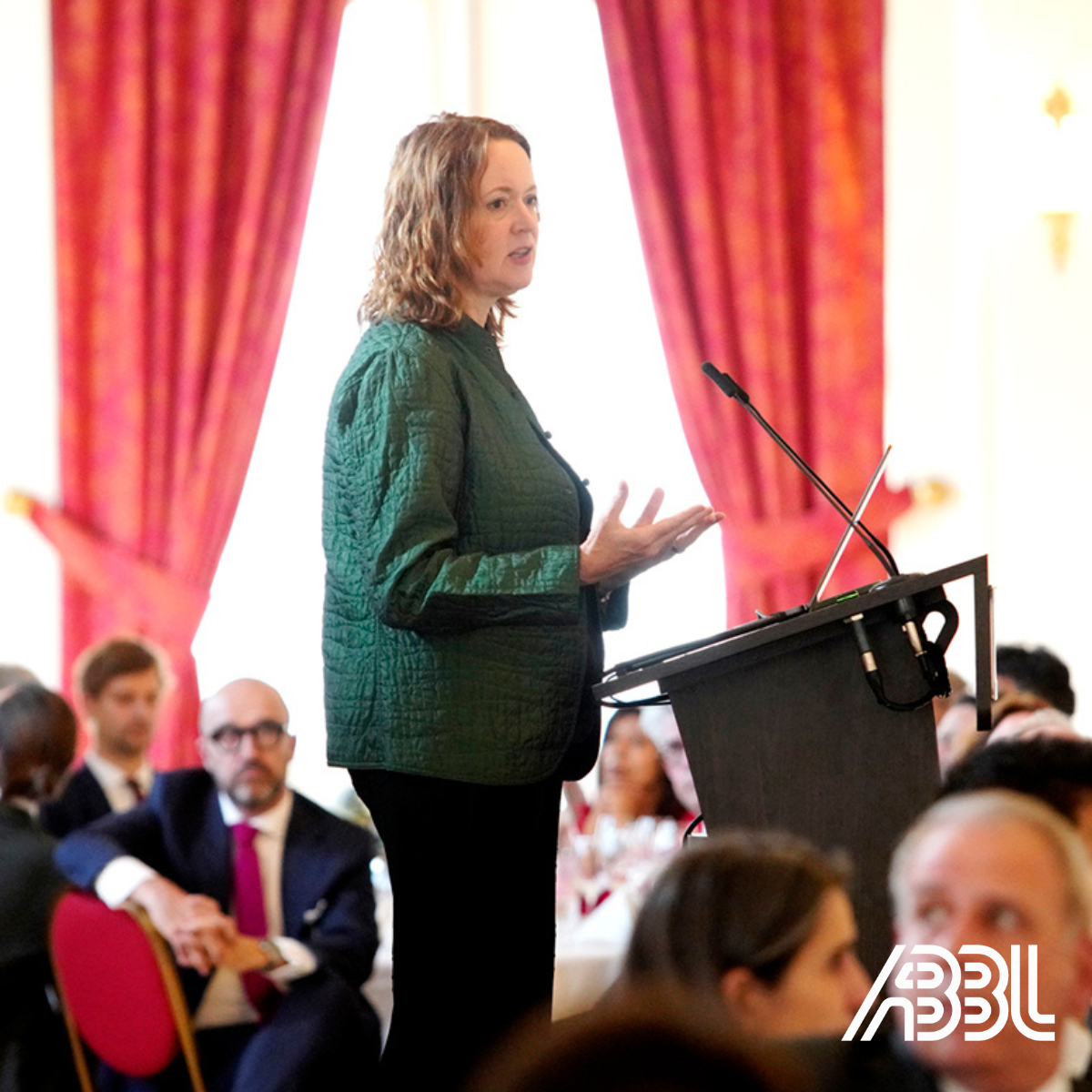
Heather Grabbe, Senior Fellow at Bruegel, invited the audience to widen the lens even further.
In conversation with Antoine Kremer, Head of the ABBL’s Brussels Representation Office, she challenged participants to look beyond today’s visible threats. Drawing on Donald Rumsfeld’s famous distinction between “known knowns”, “known unknowns” and “unknown unknowns”, she argued that Europe has become reasonably good at preparing for the risks it can identify: military threats, cyberattacks, economic coercion and geopolitical tensions.
The real challenge lies elsewhere: in anticipating shocks that emerge from unexpected directions or through channels that remain largely overlooked.
Climate change was perhaps the most striking example.
Rather than presenting it as an environmental issue, Grabbe described it as a macroeconomic and geopolitical risk that is already reshaping Europe’s economic landscape. Extreme weather events are becoming more frequent, supply chains more fragile, insurance systems increasingly exposed and critical resources—from water to fertilisers—less predictable.
These are not distant scenarios, but structural forces that will increasingly influence inflation, investment decisions and financial stability.

Climate resilience is no longer an environmental issue. It is an economic and geopolitical imperative.
Heather Grabbe
Senior Fellow, Bruegel
 When every risk becomes interconnected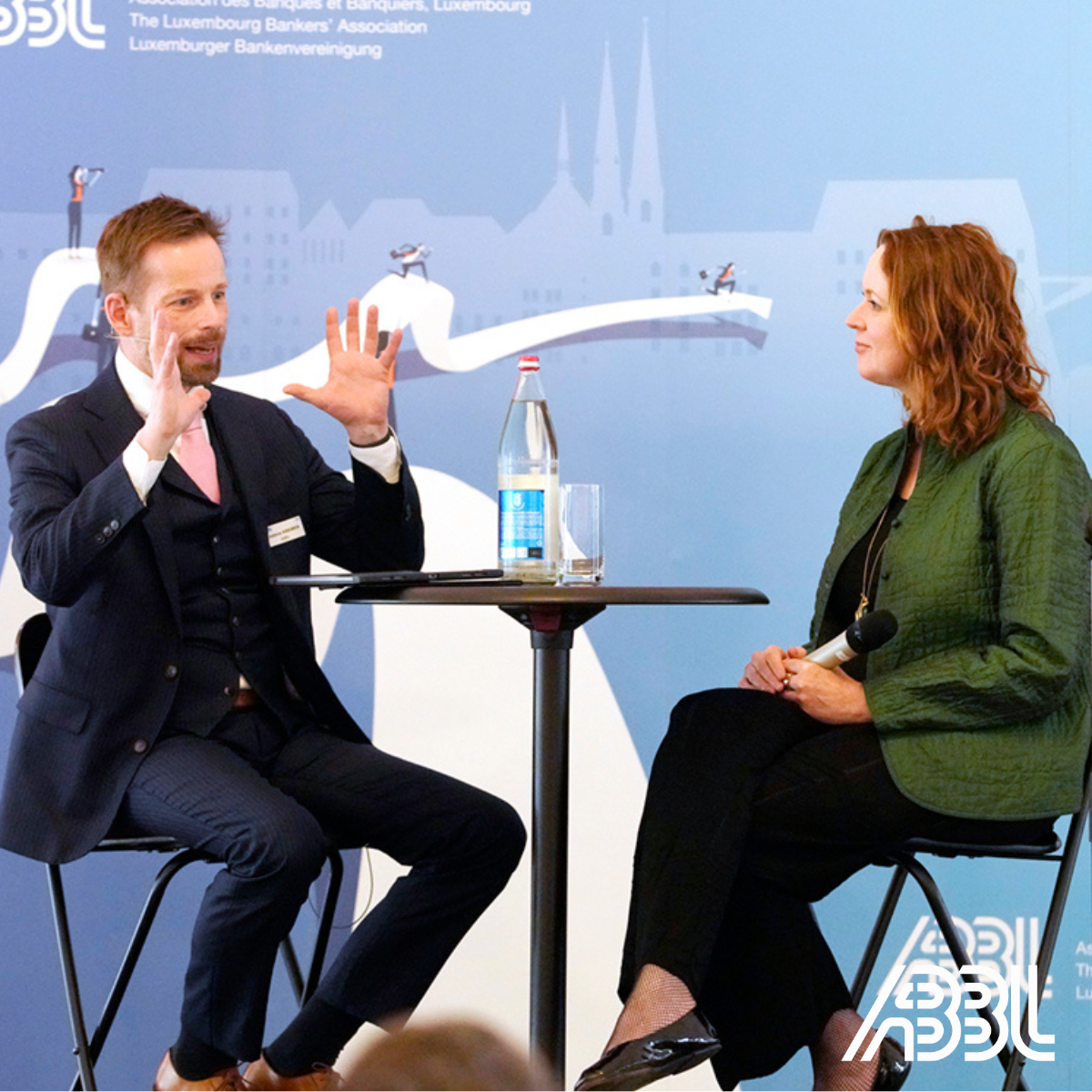
Her broader point was that resilience can no longer be built sector by sector.
Energy systems, digital infrastructure, financial markets and climate adaptation are becoming increasingly interconnected. Investments that strengthen one dimension of resilience often reinforce another. Distributed energy production, for example, not only reduces dependence on imported fossil fuels but also makes infrastructure less vulnerable to sabotage or military attacks. Likewise, climate adaptation should not merely be viewed as a cost, but also as an opportunity for innovation and industrial leadership.
Throughout the evening, one idea repeatedly surfaced: Europe’s greatest vulnerability may not be a lack of resources or talent, but its excessive dependency.
Whether that dependency concerns energy imports, cloud infrastructure, critical technologies or capital markets, the underlying question remains the same: what happens if a service or supply chain on which Europe relies suddenly becomes unavailable?
Strategic autonomy, both speakers argued in different ways, should therefore not be confused with isolation. It is about preserving openness while ensuring that openness does not become vulnerability.
 Luxembourg’s competitive advantage
That perspective also resonates strongly with Luxembourg.
As one of Europe’s most international financial centres, Luxembourg has always thrived through openness, adaptability and specialised expertise. Maintaining that position will increasingly depend on attracting international talent, investing in new technologies, strengthening cybersecurity and ensuring that regulation remains robust without unnecessarily constraining innovation.
These priorities have become central to the ABBL’s advocacy, both nationally and through its engagement with the European Banking Federation and its Brussels Representation Office.
Key takeaways
- Europe’s competitiveness increasingly depends on its ability to withstand systemic shocks.
- Private capital will be essential to finance the green, digital and defence transitions.
- Climate resilience has become an economic and financial imperative.
- Reducing strategic dependencies strengthens Europe’s long-term resilience.
- Luxembourg’s financial ecosystem has a key role to play in mobilising investment.
The real test lies ahead
If there was one takeaway from the evening, it was this: resilience is no longer about preparing for the next crisis in isolation. It is about recognising that finance, technology, energy, climate and geopolitics now interact in ways that make the unexpected increasingly likely.
The organisations—and the economies—that will thrive over the next decade will not necessarily be those that can predict every shock.
They will be those that are prepared for surprises.