

ABBL Internal
Resilience, precision and performance with limited means: lessons from the track
Published on 25 March 2026
What does it take to deliver high performance in a constrained and high-pressure environment?
Drawing on his experience in international motorsport, Gil Linster shares practical insights on resilience, preparation and execution — offering valuable lessons for organisations navigating complexity and constant change.
Summary
What does it take to deliver consistent high performance in an environment where margins are minimal, pressure is constant, and resources are not always on your side?
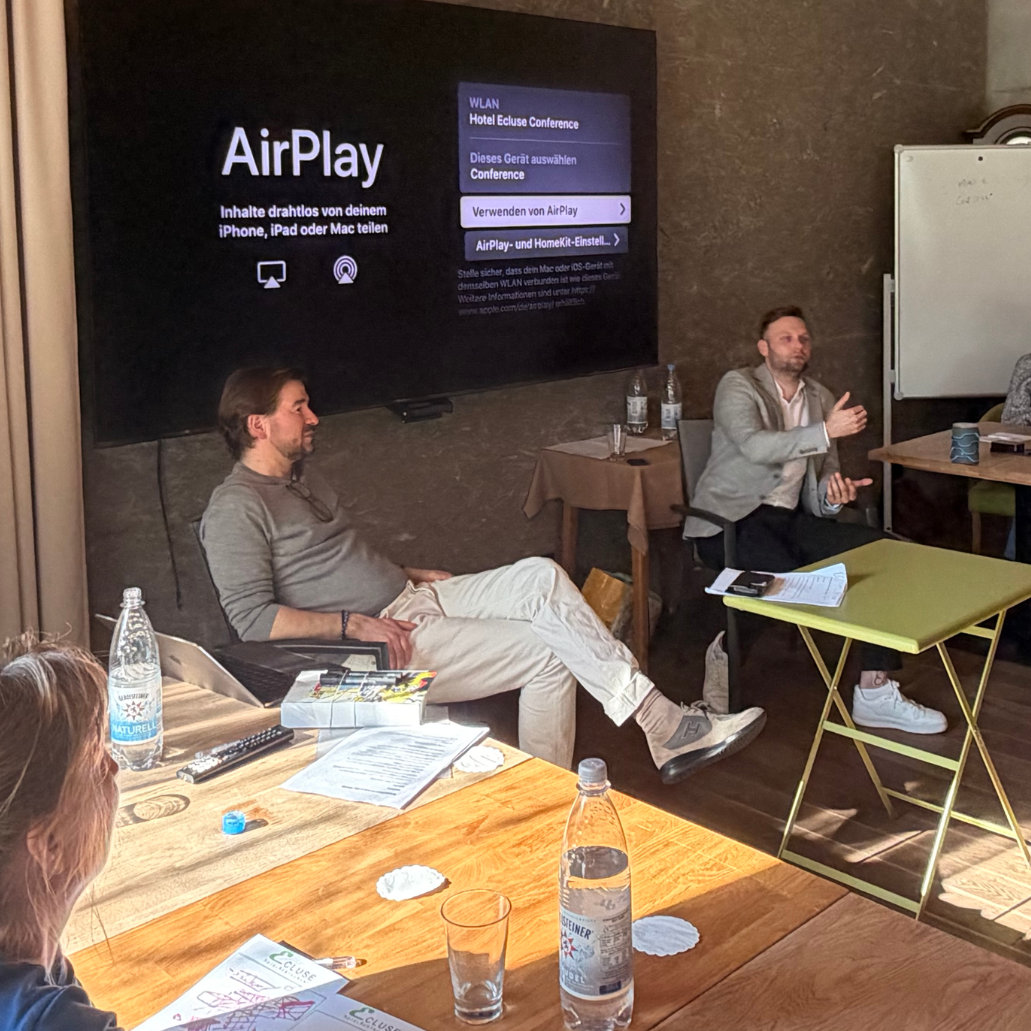
This was the central question explored during ABBL’s recent reflection and team-building day on resilience, featuring Luxembourg racing driver Gil Linster, who competes in the EuroNASCAR Series and was notably the first European driver to compete in NASCAR in the United States. His journey, marked by determination and breakthrough achievements, reflects what it means to succeed in one of the most demanding motorsport environments.
Operating without the backing of a major factory team, Linster embodies a reality familiar to many organisations: delivering results in a highly competitive environment with constrained resources.
His message was clear: performance is not only about speed or talent. It is about preparation, clarity and the ability to turn limitations into a strategic advantage.
We asked him three questions.
1. In motorsport, success often appears individual. What actually drives performance?
Gil Linster:
What people see on track is only a fraction of what creates performance. The driver is the visible part, but the result depends on everything that happens beforehand, including setup work, communication and small adjustments.
Motorsport is fundamentally a team effort. Engineers, mechanics and strategists all contribute to every decision made in the car. When I brake, accelerate or take a corner, I rely on work that has already been done collectively.
One good result can happen once. But repeatable performance — which is what really matters — requires alignment, discipline and a strong team behind you.
2. You compete in an environment where resources can vary significantly. How do you achieve performance with limited means?
Gil Linster:
Resources shape how you prepare and how you think. In motorsport, a larger budget means more testing, more data and more margin for error.
When you do not have that, you cannot afford to waste opportunities. Every session, every decision and every adjustment matters more.
Limited resources force clarity earlier. You need to arrive better prepared because you may not get a second chance to correct mistakes.
When you cannot increase physical preparation endlessly, through more track time or more testing, you compensate differently. You invest more in mental preparation, in understanding scenarios and in analysing competitors.
In the end, constraints can become an advantage. They force you to focus on what truly matters, eliminate unnecessary complexity and execute with precision.
3. Your career includes a major setback early on. What does resilience look like in practice?
Gil Linster:
At 21, I went through severe poisoning. For a period of time, it was unclear whether I could return to professional racing.
Resilience, in that moment, is not about ambition. It is about rebuilding consistency. You focus on small steps: stability, confidence and repetition.
Before aiming for performance again, you need to regain trust — in your body and in your ability to deliver under pressure.
That experience changed my mindset. When you realise how quickly things can change, you stop wasting margins. You prepare more carefully, stay disciplined and value consistency over isolated success.
And under pressure, you always fall back on what you have prepared beforehand. Performance is rarely about reacting in the moment. It is about having already done the work.
From the track to the workplace: a mindset for navigating complexity
Beyond motorsport, Gil Linster’s experience offers a valuable perspective for organisations operating in complex environments, where conditions evolve constantly, expectations are high and resources must be used with discipline. This reality strongly resonates with ABBL.
Three key insights stand out:
- Clarity drives performance in complexity: in an environment shaped by evolving regulation and diverse stakeholder expectations, prioritisation and focus are essential
- Preparation is a strategic advantage: anticipating change enables organisations to act with confidence rather than react under pressure
- Constraints can sharpen execution: operating with limited resources encourages discipline, efficiency and better decision-making
- Consistency builds trust over time: sustainable impact comes from delivering reliably, not from isolated successes
For ABBL, this mindset is particularly relevant. Operating at the intersection of regulatory complexity, strong member expectations and finite resources, success depends on the ability to align stakeholders, focus efforts and execute with precision.
Gil Linster’s testimony also reflects ABBL’s core values:
- Expertise, through rigorous preparation and a deep understanding of complex environments
- Agility, in adapting quickly to evolving conditions and making the right decisions under pressure
- Team spirit, as performance is always collective and built on coordination and trust
- Responsibility, in making disciplined choices and using available resources wisely
As in motorsport, performance is not defined by a single moment, but by the ability to prepare, adapt and deliver consistently, even when conditions are constantly changing.
Looking ahead
ABBL warmly thanks Gil Linster for sharing his experience and insights with clarity and authenticity.
We wish him continued success on the track and in his career and will be following his journey closely as he continues to push boundaries in international motorsport.
To keep up with Gil Linster’s latest results and news, you can follow him on his social media channels and through EuroNASCAR updates.
Discover more in our Annual Report

Paul Wilwertz
Head of Communication, ABBL
Published on 25 March 2026