

Digital, Innovation, Payments
EU Digital Identity Wallet: building the trust layer for Europe’s digital future
Published on 19 May 2026
The EU Digital Identity Wallet is set to become one of the most transformative digital projects of the decade. Bringing together nearly 200 representatives from the banking, financial, public and technology sectors, the ABBL conference hosted at Spuerkeess explored how digital identity could reshape trust, onboarding, payments and customer interactions across Europe.
Summary
The EU Digital Identity Wallet (EUDIW) could fundamentally transform how citizens, businesses and financial institutions interact online.
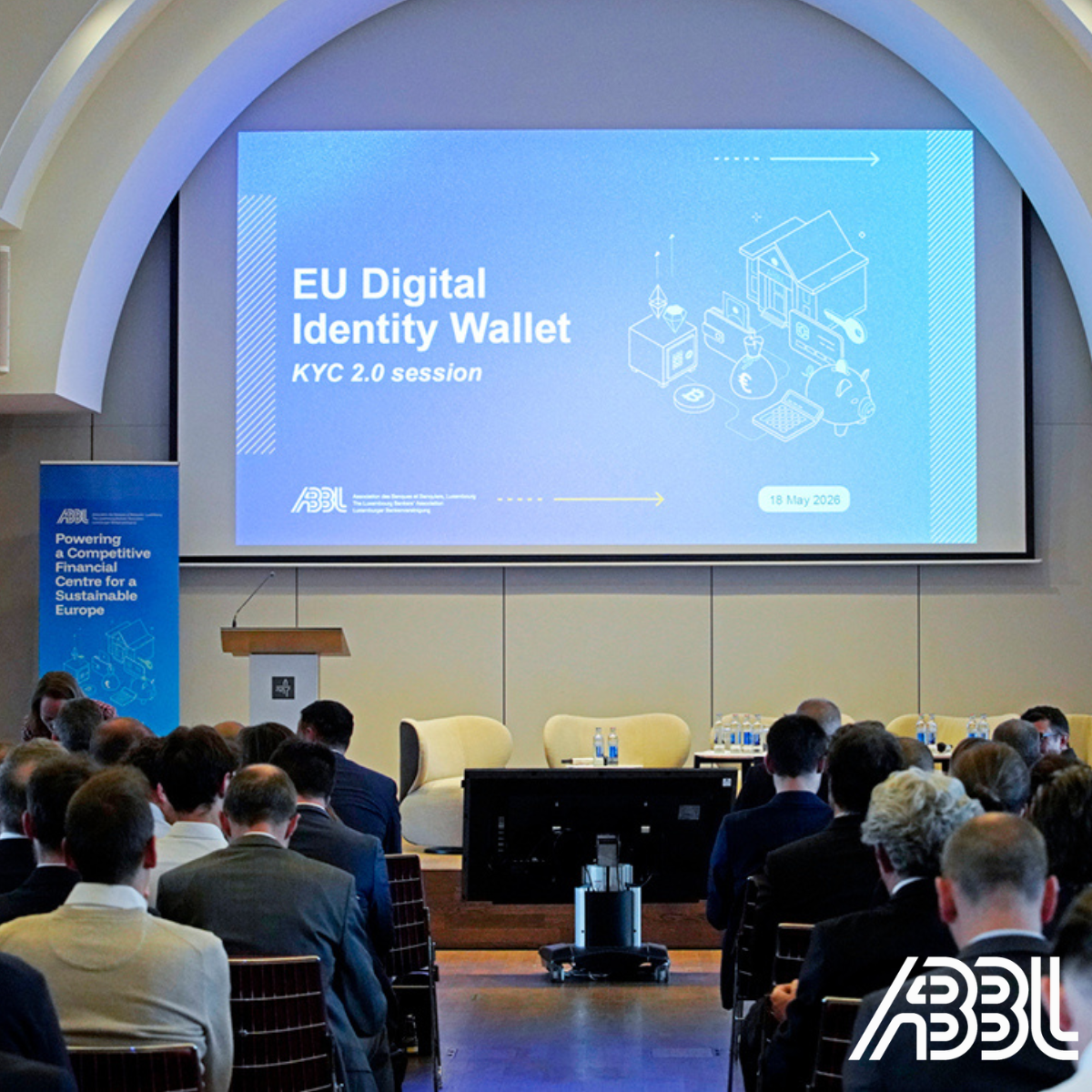
During an ABBL conference hosted at Spuerkeess on 18 May 2026, European institutions, Luxembourg public authorities, banks and technology providers gathered to discuss the practical implications of this new European infrastructure and what it will mean for the financial sector in the years ahead.
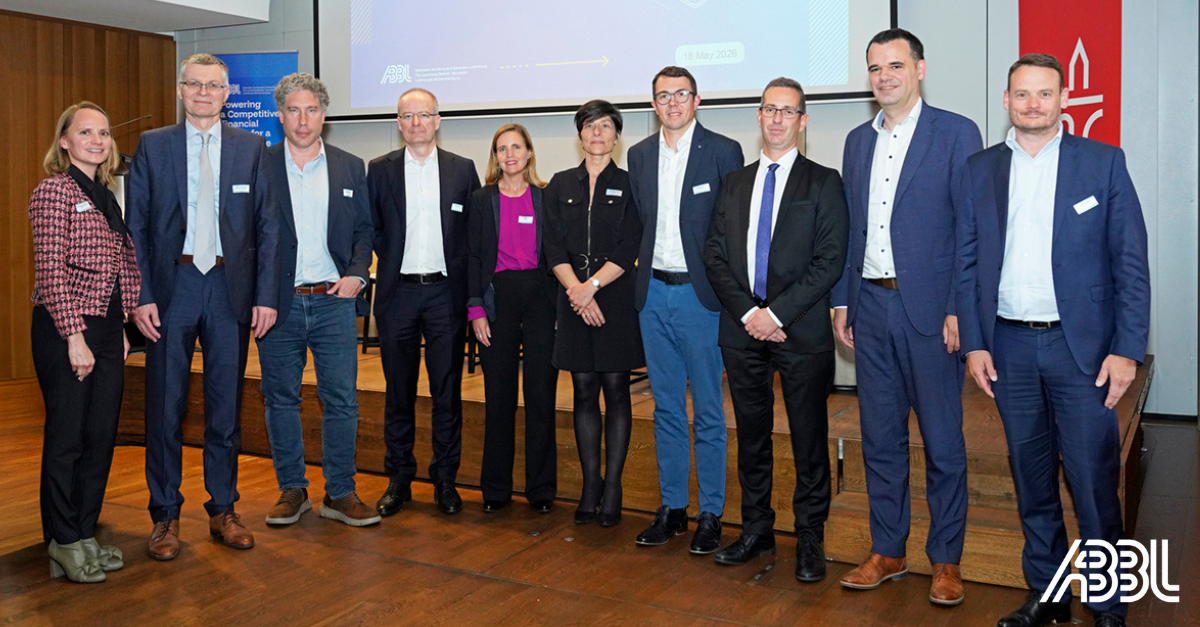
The event brought together representatives from the European Commission, the Ministry for Digitalisation, CTIE, LuxTrust, Worldline, Spuerkeess and the ABBL, alongside nearly 200 participants from Luxembourg’s banking, payments and technology ecosystem.
As implementation deadlines move closer, the discussions made one thing clear: the EU Digital Identity Wallet is no longer simply a compliance topic. It is becoming a new foundation for digital trust in Europe.


For the financial sector, the EU Digital Identity Wallet represents far more than a compliance exercise. It is an opportunity to improve customer experience, strengthen trust, reduce fraud risks and help build a more secure and interoperable European digital ecosystem.
Ananda Kautz
Member of the Management Board of the ABBL
A new trust layer for the AI era
 Opening the conference, speakers highlighted that digital identity is rapidly becoming a strategic issue extending far beyond authentication alone.
With AI agents expected to increasingly interact, transact and make decisions on behalf of users, the ability to verify identities securely and reliably is becoming critical.
As underlined during the event, without trusted digital identity frameworks, AI risks becoming vulnerable to fraud, manipulation and synthetic identity attacks.
Examples shared during the conference illustrated how fraud involving stolen identities, deepfakes and synthetic profiles is already accelerating globally, reinforcing the need for stronger and more secure digital identity infrastructures.
The EU Digital Identity Wallet was therefore presented as a key component of Europe’s future digital resilience strategy, supporting:
- trusted digital interactions
- stronger cybersecurity
- fraud prevention
- secure AI-enabled ecosystems
- cross-border digital services
From regulation to real-world transformation
The European Commission confirmed that all Member States must provide at least one EU Digital Identity Wallet to citizens and residents by 24 December 2026, while banks and other regulated private-sector actors will need to support the wallet by 24 December 2027.
Far from being a simple mobile wallet, the EUDIW is designed as a highly secure European digital infrastructure operating under harmonised standards across all Member States.

Speaking during the conference, Norbert Sagstetter, Head of Unit for Digital Identity and Trust at the European Commission, described the wallet as “one of the most transformative digital projects for Europe.”
The wallet will allow citizens to:
- identify and authenticate themselves online
- store and share verified digital credentials
- electronically sign documents with full legal validity across the EU
Importantly, the wallet introduces the concept of selective disclosure, enabling users to share only the information strictly required for a specific use case. For example, a citizen could prove they are over 18 without revealing their full date of birth.
A major opportunity for the financial sector
For banks and financial institutions, the implications are potentially significant.
The conference explored how the wallet could transform:
- remote onboarding
- KYC and KYB processes
- fraud prevention
- customer authentication
- cross-border account opening
- digital signatures and document exchange
Demonstrations presented by Spuerkeess illustrated how future onboarding journeys could become significantly more streamlined through QR-code interactions and secure credential sharing directly from the wallet.
At the same time, speakers emphasised that the transformation will require substantial preparation from financial institutions.
Topics discussed included:
- interoperability between national wallets
- liability and trust frameworks
- alignment with AML obligations
- integration into existing banking infrastructures
- customer adoption and education
- operational resilience and cybersecurity
Several speakers stressed that technical readiness alone will not determine success. Adoption by citizens and businesses will be equally critical.
Luxembourg positioning itself within the European ecosystem
The discussions also highlighted Luxembourg’s ambition to position itself as an active contributor to the European digital identity ecosystem.
The Ministry for Digitalisation and CTIE presented the work already underway on the Luxembourg wallet infrastructure, while private-sector stakeholders discussed pilot projects and interoperability testing currently taking place at European level.
Participants repeatedly underlined the importance of collaboration between public authorities, financial institutions and technology providers.
As highlighted throughout the conference, digital trust cannot be built in isolation. Successful implementation will depend on close cooperation across the entire ecosystem.
It was also recalled that the European Digital Identity Wallet (EUDIW) will be provided by the Luxembourg government to Luxembourg citizens and residents, free of charge and with no obligation to use it.
The event also explored the future concept of a European Business Wallet, which could eventually facilitate corporate onboarding, secure document exchange and digital interactions between companies and public authorities across Europe.
Building trust through collaboration
Closing the conference, the ABBL reiterated the importance of continued ecosystem dialogue and cooperation as implementation progresses.
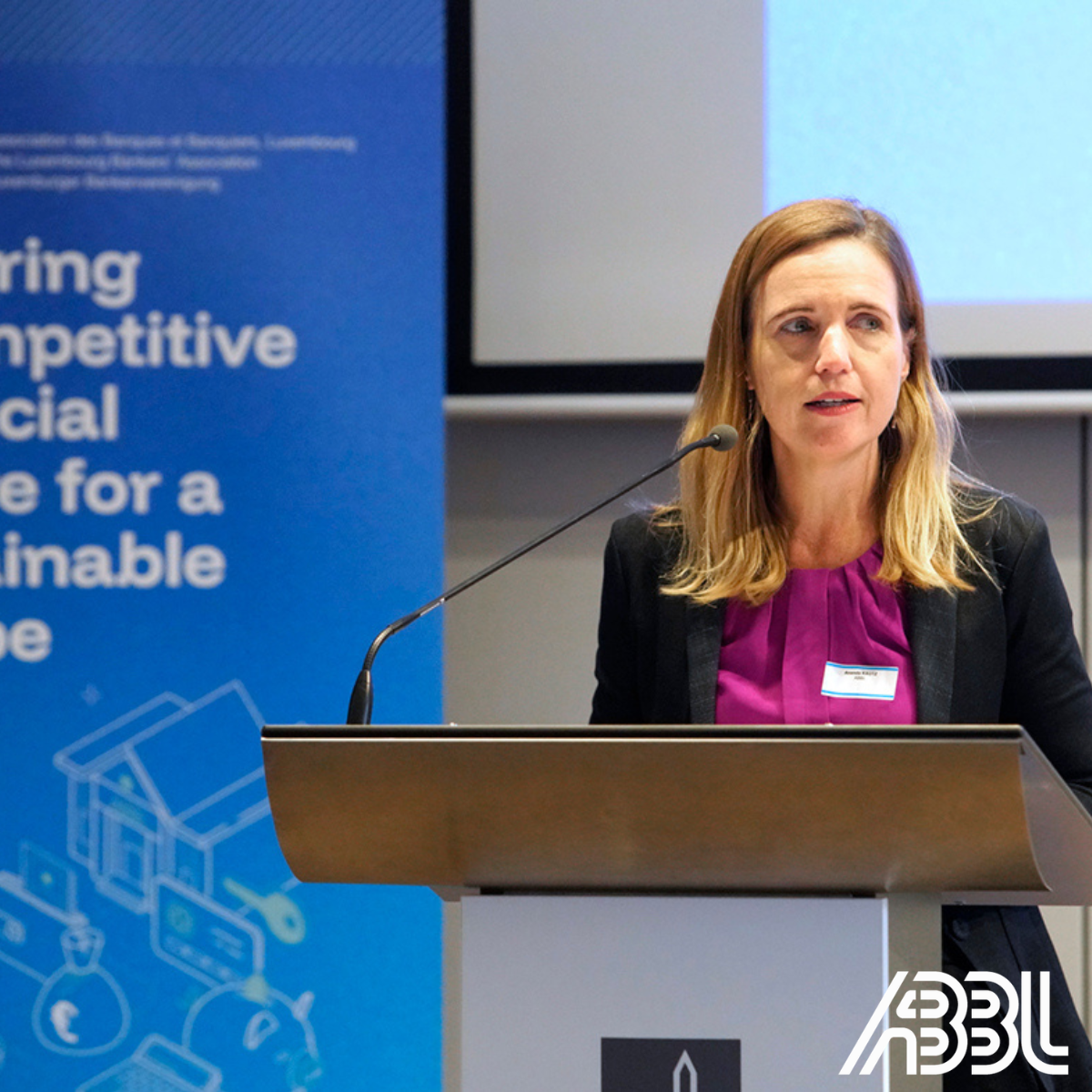
The association confirmed that it will continue supporting members through its dedicated task force on digital identity and through ongoing exchanges with public authorities and industry stakeholders.
For the ABBL, the EU Digital Identity Wallet represents not only a regulatory milestone, but also an opportunity to improve customer experience, strengthen security and support the development of trusted digital services across Europe.
As discussions throughout the afternoon demonstrated, the success of the wallet will ultimately depend on one essential factor: trust.

Galina Miroshnichenko
Adviser – Payments & Digital, ABBL
Published on 19 May 2026